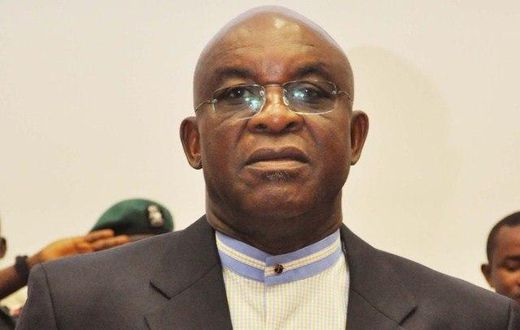


In a high-profile judgement that has caught the attention of Nigerians and international observers alike, a United States federal court has convicted Paulinus Okoronkwo, a Nigerian-American and former senior official of the Nigerian National Petroleum Corporation (NNPC), on corruption charges related to a $2.1 million bribe. This case underscores ongoing concerns about corruption in Nigeria’s vital petroleum sector and its ripple effects across Nigeria and the global oil industry.
Bribery Scandal Unravels: The Alleged Addax Petroleum Connection
According to court prosecutors, while occupying the influential position of General Manager in NNPC’s upstream division, Okoronkwo accepted a payment totalling $2.1 million from Addax Petroleum. Addax, a major oil and gas company headquartered in Switzerland and operating as a subsidiary of China’s Sinopec Group, has a longstanding presence in Nigeria’s oil sector. The payment, officials allege, was not a legitimate consultancy fee as claimed, but a disguised bribe intended to sway decisions over oil drilling rights in Nigeria’s lucrative petroleum fields.
Investigators say the funds were transferred to Okoronkwo’s law firm trust account in Los Angeles in October 2015. By routing the money in this manner and misrepresenting it as consultancy fees, the transaction was made to appear legitimate on the surface, masking its real intent: to exert undue influence and gain favours from the NNPC in Nigeria’s fiercely competitive oil sector.
FBI Investigation Reveals Falsified Records and Concealed Bribe
During a four-day trial, the U.S. Federal Bureau of Investigation (FBI) presented evidence indicating that top executives at Addax Petroleum actively participated in covering up the suspicious payment. According to documents cited by investigative news outlets, Addax’s leadership allegedly directed staff to falsify paperwork, and even dismissed employees who voiced concerns. Auditors were reportedly misled, with the bribe disguised as legal fees to avoid detection—a maneuver echoing challenges regularly faced by anti-corruption bodies both in Nigeria and globally.
Okoronkwo, who is also a licensed attorney, received the money into his firm’s IOLTA account—a type of trust account used by lawyers to handle client funds. By doing so, he created the false impression that the funds were from legitimate clients, making it harder for watchdogs or investigators to trace the source and purpose of the payment.
Lavish Expenditure, Tax Evasion, and the Alleged Cover-Up

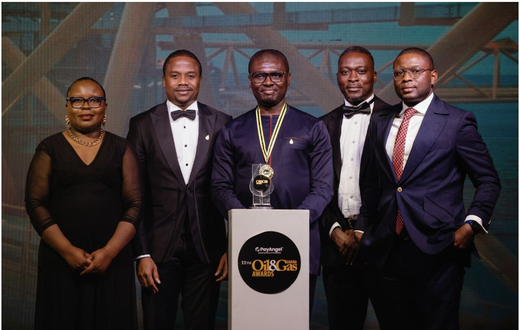
Photo credit: Contribution.
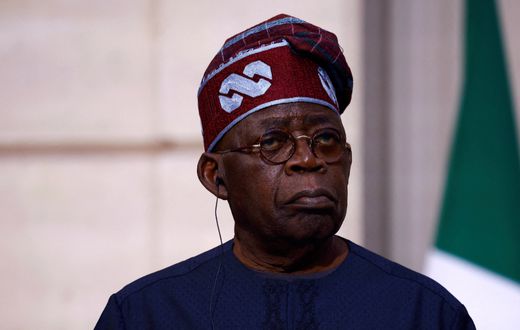
Source: Getty Images
Investigative reports and court testimonies indicate that Okoronkwo used a significant portion of the payment for personal luxury. Nearly $1 million of the funds went toward making a down payment on a residence in Valencia, California—a posh suburb north of Los Angeles. In another serious legal infraction, court documents noted that Okoronkwo failed to declare the $2.1 million received as income in his 2015 U.S. tax filings, an act of tax evasion that further compounded his legal troubles, as first reported by Vanguard.
Okoronkwo’s subsequent interactions with law enforcement are also under scrutiny. In June 2022, he reportedly misled federal investigators by denying that the funds were used in the purchase of his California property. This statement was proven false during the investigation, resulting in additional charges of obstruction of justice.
What Lies Ahead: Okoronkwo Faces Stiff Sentencing
U.S. District Judge John Walter has scheduled sentencing for December 1. Okoronkwo faces a potentially lengthy prison term: each count of money laundering carries up to a 10-year sentence, with another 10 years possible for obstruction of justice, and up to five years for tax evasion. In total, he could serve significant time behind bars if maximum penalties are upheld. The court’s decision is expected to send a clear message to public officials in Nigeria, West Africa, and beyond regarding the serious consequences of cross-border corruption.
According to the indictment:
“To conceal the illegal bribery scheme, Addax falsely characterised the $2.1 million payment as a payment for legal services, lied to an auditor about the payment, and fired executives who questioned the payment’s propriety
“To create the false impression that the bribe payment constituted client funds, Okoronkwo received the payment in his law firm’s IOLTA (Interest on Lawyers’ Trust Account).
“In November 2017, Okoronkwo used $983,200 of the illegally obtained funds to make a down payment on a house in Valencia.”
Local Reactions and Broader Implications: Nigerian Voices Weigh In
The case has sparked vigorous debate and outcry within Nigeria’s political and petroleum industry circles. Gbe Benjamin, a leading figure in the African Democratic Congress (ADC), speaking on September 14, strongly criticised Okoronkwo’s actions, stating that such incidents further erode public trust in institutions like the NNPC. Benjamin’s remarks echo a widespread sentiment in Nigeria, where citizens demand greater accountability and transparency in government contracts and dealings with foreign companies.
“Okoronkwo simply carried his corrupt character abroad, thinking America is like Nigeria where such crimes are swept under the carpet. His disgrace is a lesson that corruption has no hiding place.”
Industry experts have also weighed in, with Lagos-based analyst Ifeanyi Nwankwo telling local media that, “Cases like this highlight the urgent need for NNPC and similar agencies to enforce strict corporate governance and implement robust anti-corruption policies in line with global best practices.”
Many Nigerians see the conviction as a watershed moment in the global fight against financial crime. However, some point out the disparity in how such cases are prosecuted abroad compared to Nigeria, where delayed investigations, weak enforcement, and political interference are common obstacles. “This is a wakeup call for the Nigerian legal system,” said Abuja-based legal practitioner Tola Adeyemi. “Until high-level corruption is effectively prosecuted at home, foreign courts will keep acting as the final arbiters.”
Comparisons are drawn to previous high-profile corruption allegations within Nigeria’s oil sector, including the infamous Malabu Oil scandal and the $20 billion shortfall controversy during the tenure of Sanusi Lamido Sanusi as Central Bank Governor. The recurring pattern reinforces public demand for transparent management of Nigeria’s oil wealth to benefit citizens, not just a privileged few.
Wider Context: Cross-Border Investigations Target Financial Crime
The Okoronkwo case is part of a larger international trend of cross-border collaboration aimed at curbing financial crimes with roots in Africa. The U.S. and European authorities have become increasingly proactive in targeting money laundering and bribery activities involving foreign public officials, especially those linked to Nigeria and other resource-rich nations. According to Transparency International, corruption-related losses drain billions of dollars annually from African economies, stifling development and undermining investor confidence.
For Nigeria, which consistently ranks among the world’s top oil producers, the trial reveals deep vulnerabilities in a sector that forms the backbone of its economy. Poor oversight and weak internal controls have long plagued the petroleum industry, leaving it open to abuse by both local elites and international actors seeking to exploit gaps for financial gain.
Similar Trends: FBI Arrests of Nigerians in Other Financial Crime Cases
In a separate development illustrating ongoing efforts to clamp down on transnational crime, the FBI recently announced the arrest of 22 Nigerian nationals allegedly involved in a large-scale online sextortion scheme. According to an official statement released on April 24, 2025, the wide-scale arrests were the result of “Operation Artemis”—a ground-breaking sting operation conducted in partnership with security agencies in Canada, Australia, Nigeria, and the United Kingdom. The operation was a response to a surge in sextortion complaints from the U.S., especially those cases linked to tragic outcomes such as teen suicides.
Operation Artemis, launched almost two years ago, aimed to tackle the growing menace of online exploitation and financial crime by targeting syndicates that coerce victims into sharing sensitive material and then extort them for payment. Data from international cybercrime monitoring agencies suggest that such operations have a direct effect on crime rates in Nigeria, Ghana, and other West African nations, where porous borders and internet penetration have fuelled a rise in financial fraud.
While most Nigerians play no part in such crimes, and often fall victim themselves, these headlines can impact the country’s global reputation and can make it more difficult for honest professionals and businesses to engage internationally without undue suspicion. For many, these incidents serve as a renewed call for values-driven education, digital literacy, and enhanced collaboration between local law enforcement and global partners.
Lessons for West Africa: Strengthening Accountability and Governance
Legal and governance experts stress that the Okoronkwo conviction should be a catalyst for reforms in Nigeria and the wider West African region. Key recommendations include:
- Strengthening internal oversight and external audit mechanisms for public agencies.
- Encouraging whistleblower protection laws to empower insiders to report illegal activities without fear of retaliation.
- Improving transparency in how contract awards and licensing decisions are made within government and state-owned enterprises.
- Fostering international judicial cooperation to track and repatriate stolen assets expeditiously.
For the average Nigerian, the hope is that such high-profile convictions will motivate government bodies to intensify corruption prevention campaigns, enact meaningful institutional reforms, and ensure that those entrusted with public resources are held to the highest standards of integrity.
Do you think convictions like Okoronkwo’s will create real change in Nigeria’s fight against corruption? What steps do you believe government and citizens should take to strengthen accountability? Drop your comments below and follow us for more insightful updates.
Need general support? Reach out anytime at [email protected].
Connect with us on social media for updates, news, and real talk from across Nigeria, Ghana, and Africa: Facebook, X (Twitter), and Instagram.
Your views matter—drop your comment and join the conversation!