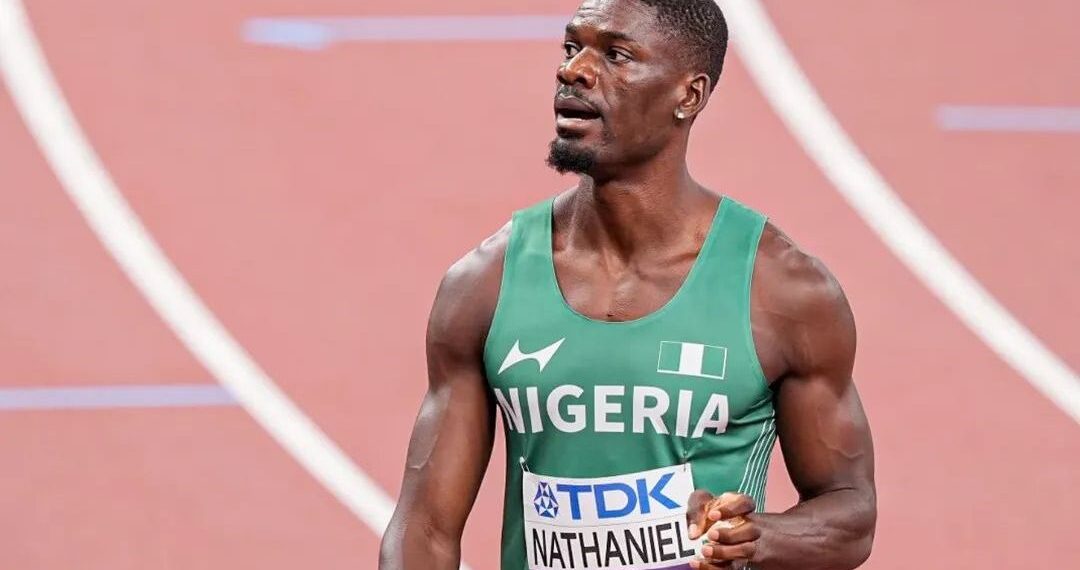


In a display that captured the heart of Nigerian athletics fans from Lagos viewing centres to diaspora groups across Africa, Ezekiel Nathaniel delivered another historic performance by breaking his own national record in the men’s 400m hurdles at the World Athletics Championships, Tokyo. Clocking an electrifying 47.11 seconds in a final packed with global talent, the 22-year-old sprinter demonstrated why he is one of Nigeria’s brightest hopes on the world stage.
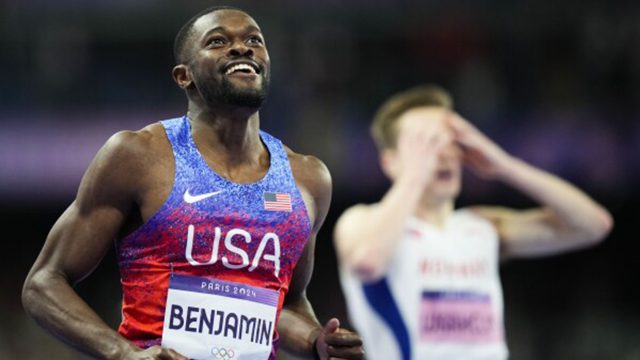
The tension in the stadium was palpable as the event unfolded. Nathaniel seemed destined for a podium finish after American Rai Benjamin was initially disqualified for a lane infringement, a decision that briefly boosted hopes among Nigerian fans and his supporters, expecting to see their compatriot secure the bronze. However, following an appeal, the disqualification was overturned and Benjamin was reinstated, reclaiming his gold medal position. The emotional rollercoaster was felt not just on the track but across social media platforms and in communities following the race live in Nigeria.
When the dust settled, Brazil’s Alison dos Santos had secured second place with an impressive time of 46.84 seconds. Qatar’s Abderrahman Samba posted 47.06 seconds for bronze, edging Nathaniel into fourth by a narrow margin. It was a result both thrilling and heartbreaking, but the significance of Nathaniel’s feat was not lost on keen observers and local athletic officials.
Nathaniel’s time of 47.11 seconds did more than impress—it shattered his own existing Nigerian benchmark, which stood at 47.31 seconds from the Kamila Skolimowska Memorial in Poland earlier in 2025. Each new record has added momentum to Nigeria’s surging track and field profile, inspiring young athletes in Abuja, Accra, and beyond.
Speaking shortly after the event, Nathaniel reflected on the outcome with poise and sportsmanship, acknowledging the integrity of the judges’ decisions and supporting his competitor.
He said, “It’s a fair call. He put in a lot of work to get that medal, and if they are trying to rip that away, I don’t think that’s fair. He didn’t deliberately knock over the hurdle — that could happen to anyone.”
“Everyone came out here to put in a lot of work, and that man deserves it. I’m also extremely proud of myself for being able to make it to the world finals.”
“I’m always confident, but at the same time, I do not underrate my fellow competitors, because anyone could virtually run fast at any time.”
Nathaniel’s humility and perspective earned praise from Nigerian sports analysts, with veteran coach Bako Ahmed noting, “His attitude is what will take him further—he’s showing the maturity and mental strength required at the world level.” According to Lagos-based sports journalist Funke Ijeoma, Nathaniel’s record-breaking performance serves as “a rallying point for West African athletics, giving aspiring runners a figure to believe in, not just for Nigeria, but for Ghana and the entire region.”
Championing Excellence: Nigerian Athletics on the Rise
Nathaniel’s journey has resonated with the challenges and ambitions of young African athletes. From training on local tracks sometimes lacking in equipment, to competing against seasoned athletes from countries with stronger support systems, his achievements suggest a shifting tide. According to statistics tracked by the Athletics Federation of Nigeria, participation in local competitions and interest in track and field have risen by more than 30% over the last three years, driven in part by success stories like Nathaniel’s.
Spotlighting the significance of his Tokyo final, Nigerian commentator Uche Obi stated, “Competing in the world final and setting a national record despite the pressure is no small feat. It shows that with consistent support, our athletes can stand toe-to-toe with the world’s best.”
Navigating Setbacks and Looking Ahead
Despite narrowly missing out on the medals, Nathaniel’s focus remained on growth and learning. After the race, he made it clear that each experience adds value to his preparation for future championships. He stressed the importance of team support and continuous improvement:
“I just go in there, and I try to execute what I’ve learnt. I was fully ready for this race. I’m going to talk to my coach, and we’ll make the right adjustments.”
“I’m also happy with the presence of my partner with me in Tokyo. She’s been supporting me all through the whole year. She was at the NCAA with me and in Nigeria.”
“It’s really amazing to have her around, and after my race, it’s good to see someone I know looking at me and picking my odds.”
Family and close relationships play a strong motivating role for many Nigerian and African athletes, a point not lost on those following Nathaniel’s progress. Sports psychologist Dr. Grace Adeniji, speaking from Ibadan, explained, “Having a strong emotional support system can be the difference between an athlete breaking under pressure or breaking records.”
Lessons and Impact for West African Sports
Nathaniel’s performance—setting a new national record and finishing fourth among the world’s elite—underscores the momentum building within Nigerian athletics and across the West African region. It echoes the breakthrough achievements of regional stars in previous decades, such as Francis Obikwelu’s European successes after his time with Nigeria and Ghana’s Aziz Zakari at global competitions. The rise of homegrown talent also challenges African sports authorities to further invest in infrastructure, athlete welfare, and technical coaching.
- Training Facilities: Experts emphasize the need for government and private sector investment in state-of-the-art tracks and training centres.
- Coaching: Continuous professional development for local coaches can help maintain and elevate these recent gains.
- Youth Development: Successful athletes like Nathaniel inspire the next generation, but structured youth programs remain essential for sustained progress.
Nigerian Athletics Federation officials reportedly plan to celebrate Nathaniel’s achievement at the next national sports festival, hoping it will galvanize even more youth to embrace track and field.
Global Recognition and Local Aspirations
Nathaniel’s accomplishment did not go unnoticed at the international level. Athletes and officials from competing nations lauded his determination. According to World Athletics’ official communication, his times not only set a record for Nigeria but also position him among Africa’s top 400m hurdlers of all time—a list that includes continental legends like Kenya’s Nicholas Bett and South Africa’s LJ van Zyl.
While the spotlight now shifts to forthcoming championships—including the Paris 2024 Olympics and the African Games—Nigerians are left to reflect on the impact of Nathaniel’s grit and talent. Sports enthusiasts will be keen to see how his progress influences funding, grassroots sports policy, and the African athletics narrative.
What did you think of Ezekiel Nathaniel’s heroic performance and the state of athletics in Nigeria today? Do you believe Nigeria and West Africa can reclaim their place at the top of global track and field? Share your opinions below and let’s continue this important conversation!
Enjoyed this article? Want your story featured or have an opinion to share on Nigerian sports? We’re always looking for real stories and perspectives from the athletics community!
- Send your story or suggest a feature: [email protected]
- Need support? Email us at [email protected]
- Follow us for the latest sports updates:
Facebook,
X (Twitter),
Instagram
Have your say, discuss in the comments, and inspire the next generation of African athletics!