

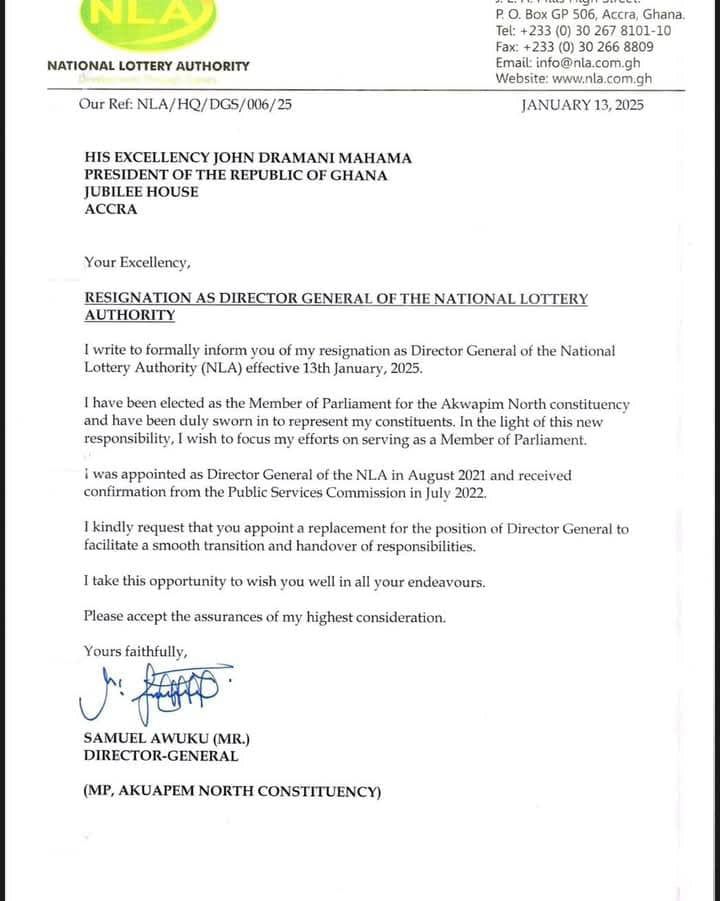
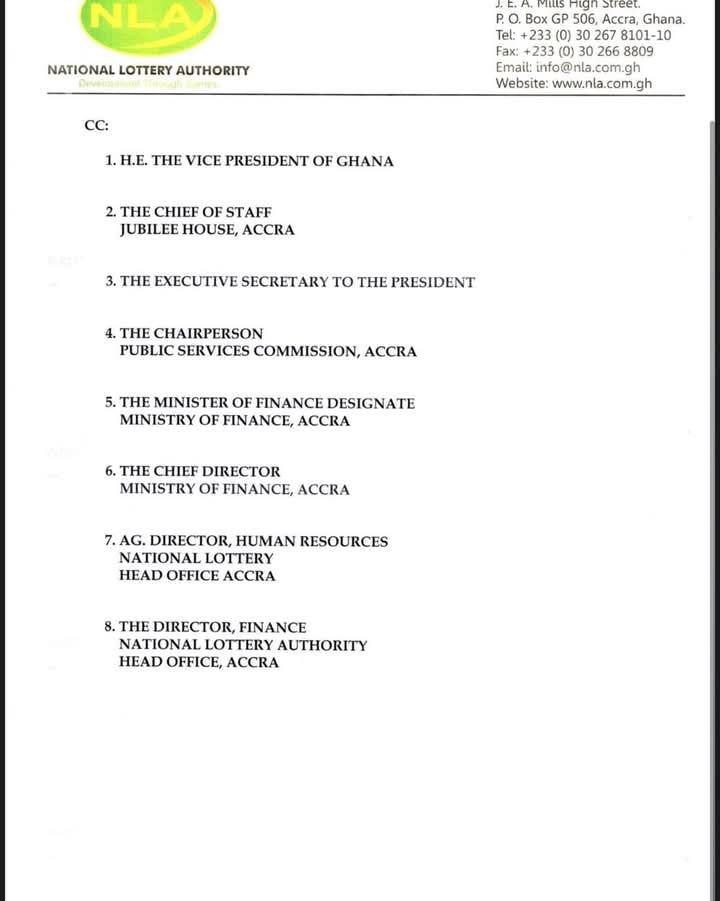
Ghana’s political landscape has witnessed a significant shift with the resignation of Samuel (Sammi) Awuku, the Member of Parliament for Akuapem North, from his position as Director-General of the National Lottery Authority (NLA). According to a resignation letter obtained by media outlets and addressed formally to President John Dramani Mahama, Awuku’s resignation takes effect immediately as of Monday, 13th January 2025. This development is attracting attention not just within Ghana, but across West Africa, with Nigerian observers keenly watching the implications for governance and public sector leadership in the region.
In his correspondence with the President, Sammi Awuku outlined that the primary motivation behind his decision was to fully commit to his legislative responsibilities as the representative for Akuapem North. According to reports from GhanaWeb and other local news agencies, Awuku stressed the need for undivided attention in serving his constituents at Parliament, suggesting that holding dual leadership positions could dilute his effectiveness:
I have been elected as the Member of Parliament for the Akuapem North constituency and have been duly sworn in to represent my constituents. In light of this new responsibility, I wish to focus my efforts on serving as a Member of Parliament.

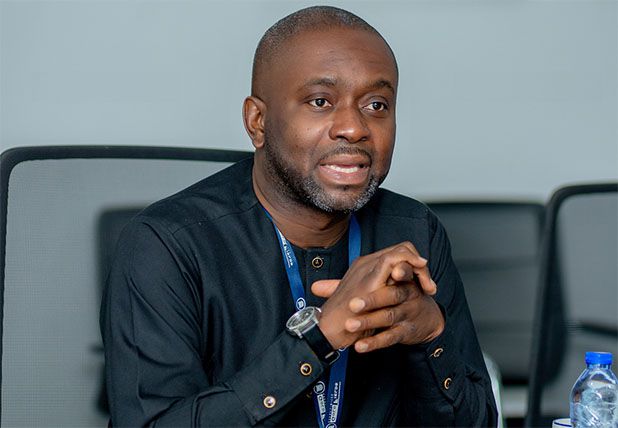
Sammi Awuku
Awuku’s letter further implored President Mahama to initiate the search for a suitable successor at the NLA, assuring that a timely transition would allow for the orderly handover of duties. He took the opportunity to reflect on his career at the Authority, highlighting milestones and acknowledging the support he had received from stakeholders during his tenure:
I was appointed as Director General of the NLA in August 2021 and received confirmation from the Public Services Commission in July 2022.
I kindly request that you appoint a replacement for the position of Director General to facilitate a smooth transition and handover of responsibilities.
For readers in Nigeria and across West Africa, Sammi Awuku is no stranger to political headlines. Renowned for his service as the former National Youth Organiser of Ghana’s New Patriotic Party (NPP), Awuku secured the parliamentary seat for Akuapem North after a closely watched 2024 election. According to official results published by Ghana’s Electoral Commission, Awuku garnered 28,365 votes, outpacing his primary rival, John Evans Kumordzi of the National Democratic Congress (NDC), who received 14,217 votes. Political observers note that this resounding victory further cements his influence within both the NPP and in Ghanaian politics more broadly.
Meanwhile, another high-profile leadership change has unfolded in Ghana’s public sector. President John Dramani Mahama has reportedly terminated the appointment of Edward Nana Yaw Koranteng as Chief Executive Officer (CEO) of the Minerals Income Investment Fund (MIIF). News outlets including Graphic Online and local radio stations confirm that the decision was communicated through official government channels, raising questions about ongoing reforms within Ghana’s financial and extractive industries.
Further details made public through a letter dated January 13 from the Secretary to the President, Dr Callistus Mahama, indicate that Mr. Koranteng has been instructed to hand over his responsibilities to the Finance Minister-designate, Dr Cassiel Ato Forson, pending the appointment of a new CEO. Although no official reason has been publicly cited for Koranteng’s removal, government sources say the move is aimed at ensuring effective stewardship and continuity at the Minerals Income Investment Fund, a key body tasked with managing Ghana’s mineral revenues.
Regional and Nigerian Perspectives: Why Leadership Changes in Ghana Matter
Nigeria and Ghana, two of West Africa’s most powerful economies, share similarities in managing leadership transitions within their public sector. Stakeholders in both nations emphasize the importance of transparent transitions for good governance and accountability. Nigerian experts, speaking to BusinessDay and The Guardian, note that smooth handovers help instill public confidence in government agencies, an issue that frequently draws attention in Nigeria’s own leadership circles. The recent high-profile resignations and dismissals in Ghana have resonated with Nigerian policymakers and civil society, many of whom have had to grapple with similar pressures regarding dual political appointments and the balancing of legislative and executive roles.
Comparative Reflections: Leadership, Governance, and Institutional Reform
According to analysts from the Centre for Democracy and Development (CDD-West Africa), the dual role of lawmaker and chief executive has often poised a conflict of interest risk—something Nigerian and Ghanaian observers alike are working to address through legislative reforms. In Ghana, the recent moves are viewed as part of a growing trend to separate party politics from crucial public sector oversight in order to strengthen state institutions. Experts from Afrobarometer and local think tanks say that as both countries expand their efforts to curb corruption and improve operational efficiency, such headline resignations could inspire similar scrutiny within Nigeria’s own agencies, such as the Nigerian Lottery Regulatory Commission (NLRC), Nigerian Sovereign Investment Authority (NSIA), and others.
- Calls for effective succession planning and leadership transition procedures are growing among West African civil society organizations.
- Some critics caution that abrupt reshuffles can result in service delivery gaps if measures are not put in place for proper knowledge transfer.
- Lawmakers, both in Nigeria and Ghana, are being called upon to publicly disclose possible conflicts of interest and refrain from holding dual remunerative offices.
Mixed Reactions from the Region’s Political Landscape
Reactions from political leaders and members of the public have been varied. Supporters of Sammi Awuku laud his sense of duty and prioritization of constituency interests, highlighting his years of engagement with the youth and local business communities. Detractors, however, urge greater scrutiny of the circumstances surrounding high-level public exits, calling for more transparency in the appointment and dismissal of heads of key agencies. Social commentators in Nigeria, including those speaking on Arise TV and Channels, note that keeping government operations void of partisan interference should be a key lesson for all emerging democracies in the region.
Looking Ahead: Implications for Nigeria, Ghana, and West Africa
These latest leadership shifts raise essential questions about continuity and the future of public service in Ghana, with broader implications for West African governance. Will the changes at the helm of such strategic agencies set a precedent for transparency and accountability in public office? How can lessons from these developments shape Nigeria’s own approaches to leadership succession and policy oversight?
For now, the main priority, as echoed by analysts across Accra, Lagos, and Abuja, is to ensure that essential public agencies remain steadfast in their mandates amidst political changes. Ongoing public discourse is likely to intensify as both Ghanaian and Nigerian leaders draw from each other’s experiences in pursuit of more credible, citizen-focused governance across the region.
What do you think about leaders stepping away from dual public roles? Should Nigeria and Ghana consider stricter rules on political appointment overlaps to boost accountability and service delivery? Share your thoughts below or on our social channels!
Food inquiries: [email protected]
General support: [email protected]
Story sales/submissions: [email protected]
Follow us on Facebook
Follow us on X (Twitter)
Follow us on Instagram