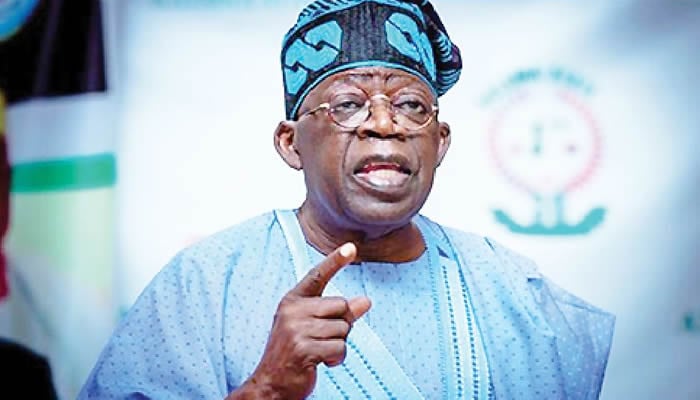
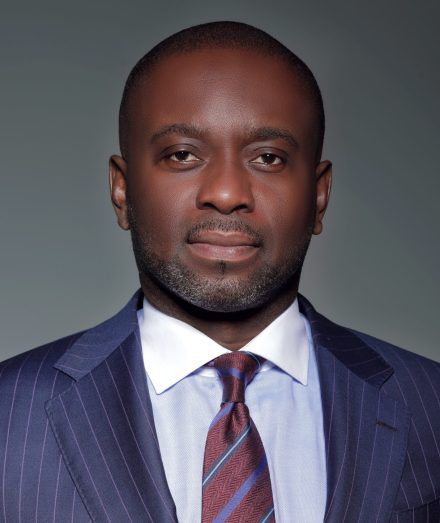
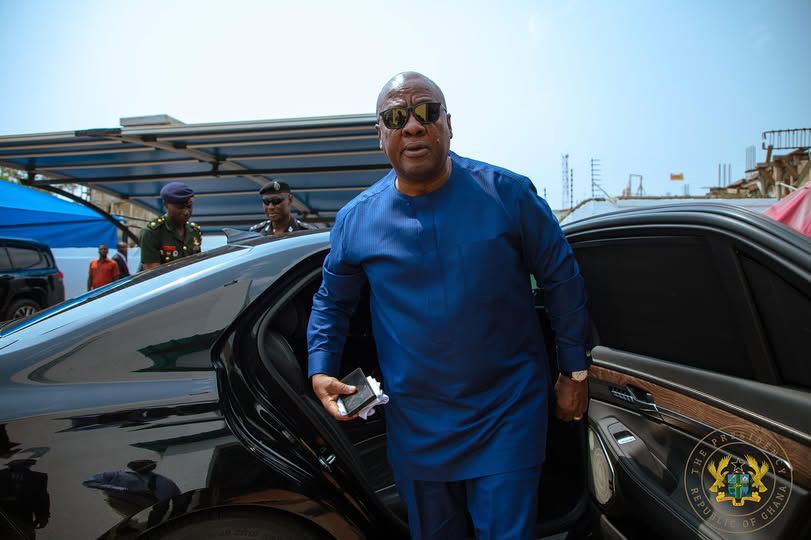
In a significant cabinet shake-up with ripple effects across Ghana and West Africa, President John Dramani Mahama has relieved Edward Nana Yaw Koranteng of his duties as Chief Executive Officer (CEO) of the Minerals Income Investment Fund (MIIF). The decision, which takes immediate effect, was announced in a statement from the Office of the President.
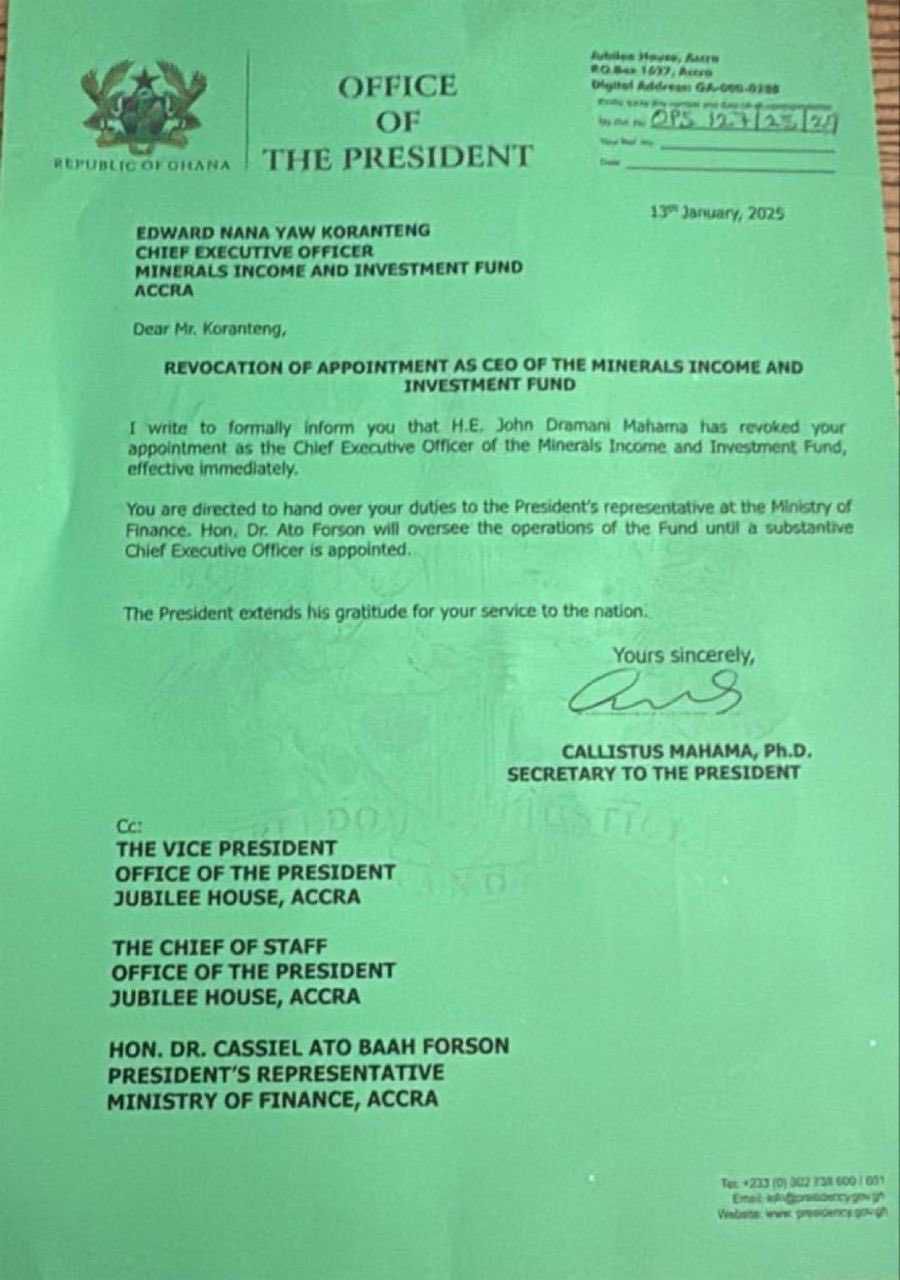
The official correspondence, dated January 13 and signed by Dr Callistus Mahama (Secretary to the President), instructed Mr Koranteng to transfer his responsibilities to Dr Cassiel Ato Forson, the Minister-designate for Finance, until a new CEO is formally appointed. This development marks a critical change in leadership at an institution central to managing Ghana’s mineral wealth—a move expected to be closely watched by experts in Nigeria, across West Africa, and by global markets.
The letter from the presidency, which has since come to public attention, set out the instructions for the handover process:
You are directed to hand over your duties to the President’s representative at the Ministry of Finance. Hon. Dr. Ato Forson will oversee the operations of the Fund until a substantive Chief Executive Officer is appointed.
The President extends his gratitude for your service to the nation.
The Tenure of Edward Nana Yaw Koranteng
Edward Nana Yaw Koranteng had led the MIIF since 2021, overseeing strategies to maximize the nation’s mining revenues. During his time, his leadership was marked by efforts to solidify Ghana’s position as a regional powerhouse in mineral resource management, a topic not unfamiliar to observers in Nigeria with its own drive for maximizing oil and solid minerals revenues.
Understanding the Role of MIIF
The Minerals Income Investment Fund (MIIF) acts as Ghana’s mineral sovereign fund, a crucial pillar in the nation’s quest for economic stability and diversification. Established to function as a strategic tool, the MIIF is designed to optimize value from Ghana’s extensive mining sector—much in the way Nigeria’s sovereign wealth and oil funds seek to bolster national growth and sustainability.
The fund’s mandate is substantial, involving:
- Managing Ghana’s equity stakes in various mining companies
- Collecting and managing dividends and royalties from these holdings
- Supervising the efficient investment of royalty and mineral-income receipts
- Driving strategies to increase transparency and accountability in minerals income management
For Nigerian and West African business readers, these principles echo challenges and opportunities faced in resource-rich societies throughout the region.
Broader Cabinet Reshuffle: Board Members Discharged
This dismissal did not occur in isolation. President Mahama has also reportedly dissolved the boards of various statutory agencies, corporations, commissions, and councils, especially those staffed by appointees of the previous Akufo-Addo administration. Such sweeping changes often signal attempts to realign policy focus or build new alliances ahead of key political cycles—dynamics paralleled in Nigeria during governmental transitions.
Implications and Reactions Across West Africa
The sudden changes at MIIF and across Ghana’s statutory boards have drawn varying reactions from governance analysts, civil society, and the regional business community. While some praise the move as necessary for reform and accountability, others warn of interruptions to ongoing projects or possible politicization of strategic sectors.
Lagos-based governance analyst, Ifeanyi Okechukwu, noted, “Whenever leadership transitions occur in state wealth or minerals management institutions, the regional market watches closely. It is essential for transitions to be transparent to avoid investor uncertainty, especially considering Ghana’s influence in West Africa’s mining corridor.”
For Nigerian policymakers, the transition serves as a reminder of the importance of robust frameworks for resource oversight. With Nigeria’s own history of leadership changeovers in petroleum and solid mineral agencies, lessons from Ghana’s experience could inform best practices or cautionary approaches.
What’s Next for MIIF and Ghana’s Mining Sector?
As Dr Cassiel Ato Forson temporarily assumes CEO responsibilities at MIIF, stakeholders across the public and private sectors are scrutinizing both the process and its possible impact. Among the immediate concerns are:
- Continuity in key mining agreements and contracts
- Assurance of transparency in fund management
- Potential delays or accelerations in planned sector reforms
- Signals for investors and multinational partners operating in Ghana and looking to build regional partnerships, particularly with Nigeria
Industry observers expect a swift announcement of a new CEO to steady investor confidence. The MIIF’s future leadership is likely to shape not only Ghana’s mining sector but may also influence strategies for resource management across West Africa.
Comparative Insights: What Can Nigeria and West Africa Learn?
These events highlight several broader issues familiar to many African economies:
- Leadership transitions in critical agencies often bring both opportunity for renewal and risks of instability
- Transparent handover processes help maintain credibility at home and abroad
- Regional integration is strengthened when neighboring countries learn from each other’s successes and challenges
Ghana’s bold move in its minerals fund could inform reviews of governance in Nigeria’s own mining and oil asset management agencies. It may inspire civil society and media to advocate for greater accountability and a merit-based approach to public appointments.
Local Voices: What Are West Africans Saying?
Voices from Accra to Lagos are sharing opinions about the shake-up:
- “It’s a wake-up call for more openness in public office,” said Ghanaian transparency advocate Ama Quaye.
- “Transitions are always challenging, but with clear communication, business can continue,” a minerals export agent in Nigeria noted.
- Online, others urge the protection of ongoing sectoral reforms to ensure that ordinary Ghanaians and West Africans benefit from mineral wealth.
Looking Ahead: What Might Change?
As Ghana awaits a new MIIF CEO and recalibrates its statutory boards, many hope that these reforms will ultimately deliver greater accountability and financial returns for citizens. The region’s economic actors—whether in oil-rich Nigeria or mineral-rich Ghana—continue to debate the best ways to manage natural resources for the benefit of all, not just a few.
How do you view these leadership changes in Ghana—will they set a new benchmark for transparency in mining management across West Africa? Can Nigeria’s own resource agencies learn from their neighbor’s experience? Drop your thoughts in the comments and stay with us for deeper insights into regional policy and business news.