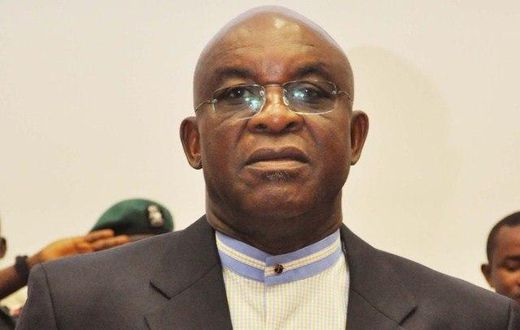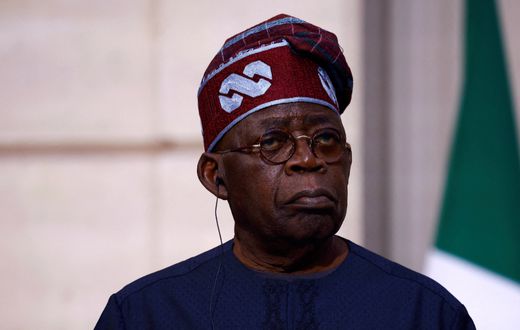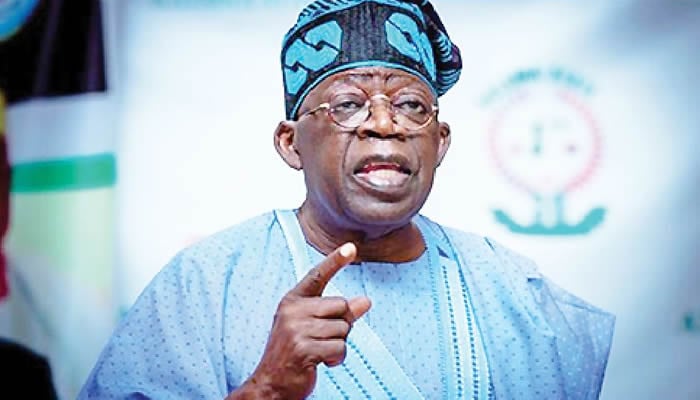


In a significant political development for Nigeria’s oil-rich South-South region, Rivers State has taken a crucial step towards restoring unity as Governor Siminalayi Fubara and former governor, now Minister of the Federal Capital Territory (FCT), Nyesom Wike, have reportedly reconciled after a period marked by intense political turmoil. The move, widely seen by observers as a major stride towards long-term peace in the state, was confirmed during a statewide address by Governor Fubara, who revealed that mediation by President Bola Tinubu played a pivotal role in brokering the truce.
Governor Fubara’s address followed the recent lifting of a six-month emergency rule declared by the presidency—a period many residents described as unprecedented in Rivers’ recent history. According to Fubara, while the emergency measures introduced challenges, they ultimately forced rival political factions to come to the table and pursue reconciliation. “During this six-month period, Mr. President graciously facilitated peaceful dialogue among all stakeholders. His Excellency Nyesom Wike, all members of the Rivers State House of Assembly, and myself have all agreed to bury our differences for the greater good of Rivers State,” the governor reportedly stated in his public broadcast.
The roots of the crisis, as political analysts in Port Harcourt explained, began earlier in 2025 when a political fallout between key actors within the state government escalated into a legislative and administrative deadlock. This standoff led President Tinubu to intervene by imposing emergency rule in March, a rare but consequential measure in Nigerian democracy. During this period, the state government—including Governor Fubara, his deputy, and the House of Assembly—were temporarily suspended, effectively placing Rivers under the direct oversight of the federal government. The suspension had a profound effect not only on the state’s governance structures but also on its economy and local communities, disrupting decision-making and everyday administration.
A Port Harcourt-based policy expert, Dr. Nimi Peters, commented, “Whenever you suspend constitutionally elected government, it sends shockwaves through institutions and the economy. Rivers State, as a major hub for oil and gas, cannot afford instability. This reconciliation hopefully signals the beginning of credible leadership and stability in the region.”
Democratic rule returned to Rivers State in mid-September, following the presidential announcement lifting the emergency restrictions. This restoration was itself a milestone, as residents and politicians alike had called for a speedy resolution amid mounting social and economic anxiety. The peace deal between Fubara and Wike is widely credited with making this transition possible, bringing an end to the public rift that had, at times, seen fierce clashes on the streets of Port Harcourt between supporters of both political leaders.
According to The Guardian Nigeria, the standoff had not only threatened governance but also hampered key public services and investments. Rivers State, often referred to as the “Treasure Base of the Nation” due to its economic significance, saw tensions rise as projects stalled and investors grew wary. Community leaders, civil society groups, and local businesses repeatedly urged both politicians to set aside personal grievances in favour of state and national interest. “Our future should not be mortgaged because of political scores,” said a youth activist in Obio-Akpor, who wished to remain anonymous.
Allegations of interference and power struggles within the Rivers political arena are not new. Previous episodes, including similar tensions in the early 2010s and late 1990s, have shown that the state’s political unity is often fragile. However, analysts argue that the recent reconciliation seems more robust, given that it comes after direct federal involvement and the unique intervention of President Tinubu—a move recalled by historians as reminiscent of national interventions in volatile Nigerian states during periods of national transition.
In the wake of this resolution, Fubara’s administration has reiterated a commitment to inclusive governance and collaborative policymaking. “We have returned to civil rule. My administration is committed to an open-door policy, engaging not just politicians but every Rivers person who wants a peaceful and prosperous state,” Fubara declared.
Still, some residents remain cautious. Past reconciliations in Nigeria have at times proved temporary, with political differences resuming once the spotlight fades. According to Chigozie Akah, a political reporter based in Yenagoa, “True progress will depend on how these leaders manage their differences going forward and how much ordinary citizens feel the benefits of this peace.”
On a broader scale, the events in Rivers State are being watched closely by other West African nations, especially Ghana and Côte d’Ivoire, where similar political rivalries have at times led to protracted disputes or even violence. For Nigeria’s democracy—Africa’s largest—such high-level reconciliations are not only vital for local stability but also serve as a regional benchmark on conflict resolution and power-sharing among strong-willed politicians. International observers note that peaceful reconciliation after sustained tension, particularly one mediated by the presidency, offers lessons for other African democracies contending with political rivalry and frequent legislative stand-offs.
Economically, stakeholders in the Niger Delta, home to Nigeria’s vast oil reserves, will watch to see whether this deal brings renewed investment, greater government accountability, and a reduction in unrest. Many businesses are hopeful but adopting a wait-and-see attitude before making major commitments. “We’ve lost millions in the last six months due to policy delays and uncertainty,” remarked a local contractor, Mr. Tamuno George. “If there’s genuine stability now, it will benefit everyone in Rivers, from traders in Mile One Market to multinationals in the industrial hubs.”
As Rivers State residents adjust to the return of normalcy, the expectation is that this reconciliation will foster confidence, attract investments, and enable the delivery of basic services that stalled during the political crisis. Civil society groups continue to urge transparency in implementing peace agreements and the inclusion of diverse voices in decision-making processes. At the same time, the rest of Nigeria—and indeed, much of Africa—will be watching to see whether Rivers’ leaders can sustain this peace and serve as a model for crisis management in an era of growing political polarization across the continent.
What’s your perspective on the Rivers State reconciliation and its impact on governance, investment, and daily life? Has your community in Rivers or beyond felt the effects of this crisis or the return to democratic rule? Drop your comments below and stay informed by following us for ongoing updates and expert analysis on Nigerian political developments.
Need support? Reach us anytime at [email protected].
Connect and engage with our community for breaking stories and local conversation: Facebook, X (Twitter), and Instagram.
Join the conversation—your voice matters!