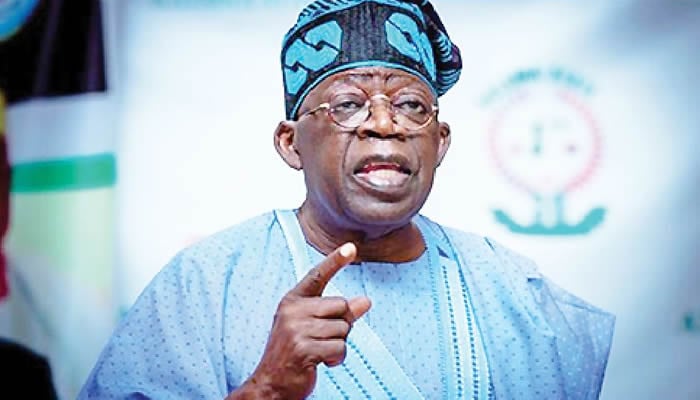


The political climate in Rivers State has become the focus of national attention as Tonye Cole, a former governorship candidate under the All Progressives Congress (APC), offered a stark prediction regarding the powers of the embattled Governor Siminalayi Fubara upon his reinstatement. Cole, speaking to a national audience during a recent appearance on Channels Television’s “The Morning Brief,” asserted that Fubara would be severely restricted in his ability to govern effectively after his suspension comes to an end.
According to reports, Governor Fubara, who was handed a six-month suspension by President Bola Ahmed Tinubu, is expected to resume his official duties on Thursday, September 18, 2025. However, Cole maintains that the governor’s return may be largely symbolic, claiming that Fubara will have, in his words, “zero” powers in practice. He suggested that decision-making in the state will face heavy interference, raising concerns about the operational autonomy of the executive branch in Rivers.
Cole went further to suggest that even when the suspension is lifted, Fubara may find it virtually impossible to make key decisions without outside influence. The political stalemate, he explained, is not just a personal issue for Fubara but speaks to a broader climate of political contestation in Rivers, a state often described as the economic heartbeat of Nigeria’s oil production.
The APC chieftain’s remarks come at a time of heightened political uncertainty in the South-South region. This period has been characterized by power tussles, allegations of interference from influential figures within Nigeria’s political circles, and questions about party loyalty and realignment.
As he made his media rounds, Cole didn’t mince words about Fubara’s predicament. “All evidence points to the fact that Governor Fubara will not be able to exercise full executive powers when he returns to office. The checks and constraints placed on him will make effective governance very difficult,” Cole asserted, referencing his own experience and ongoing developments in Rivers politics.
“We cannot be in a situation where we have an elected governor of a state, like Rivers State, which is a very critical state not just for the people of Rivers but Nigeria as a whole, and what you then see is that you have an elected governor that has zero powers.
“I don’t think it portends well at all. It’s extremely difficult, and I think the governor will be finding himself in a very difficult situation”
In an attempt to offer a practical way forward for the suspended governor, Cole advised Fubara to seek common ground with the Minister of the Federal Capital Territory (FCT), Nyesom Wike, who remains a dominant force in Rivers’ affairs. “There must be room for negotiation,” Cole said, suggesting that without some form of agreement or understanding with Wike, Fubara’s administration may be gridlocked.
“What I would do if I were him would be to now sit down with the honourable minister and appeal for some leeway to allow certain decisions to be taken by me as governor, and others to be taken by him, whatever peace agreement they had.”

Photo credit: Sir Sim Fubara
Source: Instagram
Background: Rivers State’s Political Power Play
Rivers State has long been a flashpoint in Nigerian politics, given its vital economic status and history of heated contests for power. The suspension of Governor Fubara was seen by many as the culmination of months of internal discord within the state’s political structure. Independent analysts note that such suspensions, while not unheard of in the region, often create vacuums that are quickly filled by political heavyweights with longstanding ambitions.
As Fubara’s reinstatement date approaches, the stakes have grown higher. Political insiders in Port Harcourt have commented that the “new normal” may be one of shared or contested authority rather than a clear-cut reinstatement of power. “This has less to do with one man and more with the broader contest for the future direction of Rivers,” said Dr. Nkpubre John, a lecturer in political science at the University of Port Harcourt.
APC’s Recruitment Efforts and Offers to Fubara
Amidst these tensions, the local APC leadership has reportedly extended an olive branch to Governor Fubara. The party’s spokesman in Rivers, Darlington Nwauju, stated in a widely-circulated interview that the APC is prepared to offer the governor the “NOWAHALAZONE” position within the state’s party structure—should he decide to defect. This gesture, according to Nwauju, could provide Fubara an avenue to rebuild political alliances and solidify his standing, albeit within a different political family.
Observers suggest that such moves are indicative of broader realignments underway nationally, as parties jockey for influence ahead of the next electoral cycle. Political analysts point out that defections and counter-defections have become commonplace in Nigeria, with Rivers State serving as a microcosm of the shifting allegiances in the country’s political landscape.
According to reports, President Tinubu and Governor Fubara are both slated to return to Nigeria in the lead-up to the conclusion of Fubara’s suspension. This has fueled speculation about whether any private negotiations or reconciliations might take place behind closed doors to shape the next phase of governance in Rivers.
The Role of Nyesom Wike and Party Politics
Central to all these developments is the role of Nyesom Wike, the current Minister of the Federal Capital Territory and a figure often described as the state’s political godfather. Cole, himself a co-founder of the Sahara Group, has previously called on Wike to resolve his political allegiances and consider fully joining the APC, citing ongoing confusion over his assertion of influence across party lines. “You can’t be in the APC and simultaneously control the PDP,” Cole challenged, referencing what he sees as a need for political clarity in Rivers State.
This scenario is emblematic of a broader phenomenon in Nigerian politics, where party lines frequently blur and individuals wield influence across multiple platforms. Experts, such as Lagos-based policy analyst Bose Adewumi, note that this dynamic often feeds into power struggles and helps to explain the types of impasses currently seen in Rivers.
Grassroots voices in Rivers have also been vocal. “Our people want stability and progress, not endless fighting. All these cross-carpeting and godfather dramas usually just leave ordinary citizens forgotten,” said Port Harcourt-based activist Chike Ogbonda. His sentiment echoes a widespread fatigue among the electorate regarding elite political machinations.
Implications for Rivers State and Beyond
The unfolding scenario in Rivers is not occurring in a vacuum. Much of Nigeria—and indeed West Africa—will watch closely to see how Fubara’s return is managed. Good governance in the region’s oil-rich states has critical implications for revenue flows, employment opportunities, and regional security. If internal struggles persist, observers warn that Rivers could see setbacks in infrastructure, business climate, and social cohesion.
Comparative analysis with similar episodes in Nigerian states such as Edo, and even in countries like Ghana and Senegal, underscores the importance of stable leadership for unlocking local development. Legal experts warn that the frequent suspension and uncertain reinstatement of governors undermine not only the rule of law but long-term investment and public trust.
While Rivers’ challenges are by no means unique, the state’s strategic position means any periods of instability are felt across the South-South region and beyond. The matter has also sparked debate in diaspora communities concerned about the safety and reliability of investment in key Nigerian states.
Looking Ahead: Can Reconciliation Prevail?
As the date for Fubara’s reinstatement draws near, stakeholders are watching closely for signals of dialogue, reconciliation, or further conflict. Will the governor accept compromise and negotiate with those who wield de facto power in Rivers? Might party alignments shift yet again as national parties seek to strengthen their presence in the oil-producing state? Only time will tell. What is clear is that, for the people of Rivers, the resolution—or deepening—of these disputes will have tangible impacts on their daily lives.
What are your thoughts on the current political climate in Rivers State and the broader implications for governance across Nigeria? Do you believe reconciliation is possible, or is the road ahead likely to be turbulent?
Share your opinions in the comments section and stay connected for breaking updates on this story and more. If you have a tip, a story to share, or wish to sell your news, we want to hear from you! Reach us anytime at [email protected].
For general support, email us at [email protected]. Don’t forget to follow us on Facebook, X (Twitter), and Instagram for more local and international updates!