

In the midst of swirling rumours and heated discussions across Nigeria’s political scene, the African Democratic Congress (ADC) finds itself at the heart of attention. Nigerians, well-accustomed to political drama, have seen many parties weather internal storms. This week, conversations among political commentators, on social media, and even in local newsstands, have focused squarely on the alleged legal battles brewing within the ADC. But is there truly an internal crisis, or is it merely another episode in the nation’s ever-colorful political story?
During a recent appearance on Channels Television’s ‘Politics Today’, Bolaji Abdullahi, the ADC’s National Publicity Secretary, set out to clarify these ongoing speculations. Abdullahi’s calm and direct manner spoke to many viewers, offering his perspective on what he insists is a wide gap between perception and reality, especially when it comes to the state of harmony—or disharmony—within the ADC’s national leadership.
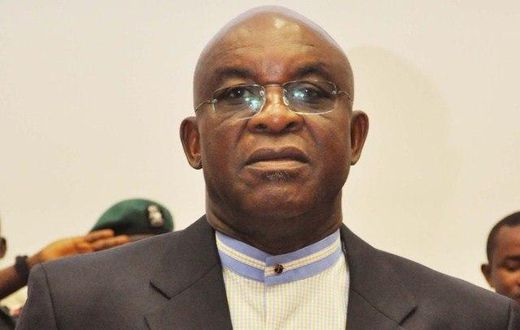
Setting the record straight, Abdullahi maintained that, contrary to claims circulating both online and through unofficial quarters, the ADC is not locked in any legal tussle concerning its leadership or party structure. According to him, the emergence of the former Senate President, David Mark, as the party’s chairman has the blessing and formal recognition of the Independent National Electoral Commission (INEC). In Nigerian politics, as in much of West Africa, INEC’s stamp of approval can often be the final word amid turbulent transitions.
This debate comes at a time when party unity matters more than ever. As Abdullahi pointed out on air, “If I answer a question about the ‘David Mark-led ADC’, it is as if I am acknowledging the existence of some other competing ADC. But there is only one recognized by INEC.” His words reflect a nuanced understanding of political dialogue in Nigeria, where the mere choice of words can sometimes add fuel to the fire of factional claims.
Yet, in true Nigerian fashion, not everyone is convinced by such declarations. The show’s host, Seun Okinbaloye, was quick to highlight that certain prominent party members, including Dumebi Kachikwu and Hon. Leke Adejide, have reportedly gone to court to contest Mark’s position and the processes that brought him to the helm. This underscores the rich tradition of political challenge, legal action, and robust dissent that colors party politics in the region.
Abdullahi, however, stood his ground, insisting that the party had not been officially notified of any court case, nor had he seen tangible evidence of litigation. “We are not aware that anybody is in court against ADC. At this moment, we are not aware,” he reiterated, calling into question the reliability of the reports and underlining that so far, the threats of legal action have largely existed only as statements at press conferences or in the media.
This is a familiar cadence for followers of Nigerian and broader African politics. Accusations and lawsuits are often thrown around, but not every threat finds its way into a court’s docket. For Abdullahi, such claims are more about political posturing than actual intent. He described a recurring pattern: press briefings and public threats that, in practice, rarely evolve into real court battles—perhaps because those raising the issues find themselves on shaky legal ground.
Delving deeper into the situation, Abdullahi emphasized that the ADC’s recent leadership change was strictly an administrative matter rather than a sign of deep division. He argued that the so-called disputes are, in reality, the natural result of a procedural transition: “What we have is the completion of the administrative process of changing the leadership of the ADC from where we are coming from to where we want to be.”
For many Nigerian and West African readers, this process will sound all too familiar. Political parties, from Accra to Abuja, have long experienced periodic transitions that become fodder for speculation and rumour. But as Abdullahi concluded, “There is no question as to whether there is any other leadership of the African Democratic Congress.”
Local reactions to the news capture the spectrum of political engagement in West Africa. Some grassroots supporters have taken to social media to express relief at what they perceive as a return to stability, while others remain skeptical, questioning whether all is as settled as party spokespersons suggest. In markets from Lagos to Kumasi, conversations continue: Can a political party in Nigeria truly function without infighting? Is the ADC breaking the mould, or is this a calm before the next wave of controversy?
For observers further afield—those watching Nigeria’s robust multi-party system from Ghana, South Africa, or even overseas—the situation is a testament to the vibrancy and unpredictability of African politics. Leadership transitions, legal contests (whether real or rumoured), and public pronouncements reflect the region’s unique blend of transparency, grassroots engagement, and the ever-present undercurrent of power struggle.
What is certain, however, is that stories like these remind us how compelling and ever-changing the Nigerian political landscape remains. As new leaders step forward and as parties seek to cement unity, the nation’s citizens—and its neighbours across West Africa—watch closely, debating at home, at work, in local joints, or online.
Do you believe political parties in Nigeria and West Africa can maintain internal unity after major leadership changes, or are internal disputes simply inevitable in our ever-evolving democracies? Share your thoughts in the comments below, and don’t forget: NowahalaZone is always on the lookout for original political stories. If you have unique insights or local reports to share, send your work to [email protected].
For food-related inquiries, please reach us at [email protected].
For general support or assistance, contact [email protected].
We look forward to hearing your views, stories, and local perspectives!