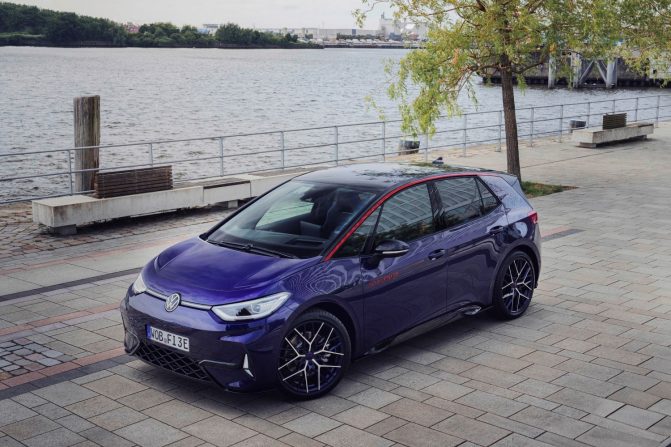


Geely posts another euphoric score in August.
The Chinese automotive industry continues its impressive growth streak, with August seeing yet another surge in sales according to recent data from the China Association of Automobile Manufacturers (CAAM). Wholesale volumes accelerated by 16.4% year-on-year, tallying a massive 2,860,000 units in August alone. This growth has boosted the year-to-date (YTD) figure to an impressive 21,130,000 units, up 12.6% compared to the same period last year. The rise is largely attributed to the booming New Energy Vehicle (NEV) segment, which saw sales climb by an outstanding 36.7%, reaching 9,620,000 NEVs sold so far this year. These numbers bolster China’s standing as a leading global automotive market, and provide important insights for Nigerian and West African importers and car enthusiasts looking to understand international supply trends and future vehicle pricing.
When focusing on passenger vehicles, the market grew 14.5% in August, totaling 2,458,000 units for the month, with the year-to-date count at 18,019,000—reflecting a 13% uptick. The breakdown for August 2024 alone reveals 1,021,000 cars sold (up 15.7%), 1,347,000 SUVs (up 14.3%), and 90,000 MPVs (up 6.8%). Over the year so far, this equates to cars increasing 12.7% (7,622,000 units), SUVs up by 12.6% (9,628,000), and MPVs surging 22.7% (768,000). Notably, domestic Chinese brands have dominated, with a 20% annual increase in August—amounting to 1,720,000 vehicles and accounting for a commanding 70% of total passenger vehicles sold.
Additionally, New Energy Passenger Vehicles (NE PVs) continue to gain market share, rising 22.3% in August alone to 1,282,000 units—representing 52.2% market share. Year-to-date, these NE PVs have climbed 33.5% to 8,931,000, which makes up nearly half (49.6%) of the annual passenger vehicle tally. On the export front, Chinese Passenger Vehicle exports soared 20.2% in August to 499,000, while total vehicle exports for the month hit 763,000. YTD Passenger Vehicle exports are also up 11.3%, reaching 3,471,000. For Nigerian and West African traders who import most of their vehicles from Asian markets, these rising figures suggest there could be increased variety and possibly competitive pricing ahead, especially in the NEV sector.
 The new Sealion 06 prevents BYD from falling even faster.
Despite the positive industry-wide trend, there are notable exceptions. BYD, a company often regarded as a barometer for China’s NEV sector, experienced a significant drop of 20.7% in sales this August. This downward trajectory, which has continued for several months, is raising concerns among financial analysts regarding BYD’s future profitability. Nevertheless, the brand passed the milestone of two million units sold through August, reflecting a modest 2.3% increase year-on-year—offering a glimmer of hope. The decrease is largely attributed to slumping demand for BYD’s most prominent models: the Seagull fell 50.8%, Song Plus declined by 67.1%, Qin L dipped by 29.4%, and Qin Plus was down 16.3%. However, according to the auto industry website Gasgoo, BYD is offsetting sharper losses through new product launches including the Sealion 06 (25,453 units sold in August), Seal 05 (13,495), the Sealion 05 (12,515), Tang L (3,712), Han L (2,202), and the compact Xiao (1,416).
Local automotive enthusiasts and importers in Nigeria and Ghana, where BYD’s reputation as a reliable EV provider still holds weight, have been watching these fluctuations keenly. According to Chukwuma Eze, a Lagos-based car importer, “The new BYD models are stirring curiosity here, but buyers want assurance about servicing and spare parts before making the switch.” The entry of new models could increase options for price-sensitive buyers, even as older models wane in global allure.
 The Nissan n7 crosses the 10,000 monthly sales mark in August.
In stark contrast to BYD’s struggles, Geely is experiencing a rapid ascent. The brand’s sales skyrocketed by 83.6% in August, bringing them just shy of the 173,000 mark. The Geely Xingyuan model broke its own monthly sales record for the eighth consecutive month, while the Galaxy sub-brand surged by 62.8% with over 43,000 units sold. Geely’s core models, like the Boyue (up 131.6%) and Binyue (up 46.1%), are posting records that demonstrate Chinese brands’ growing appeal both domestically and for international export.
Volkswagen, already a significant player in Nigeria’s import scene, saw sales decline by 7.7%, while Toyota managed only a tepid increase of 0.8%. Chery (up 13.2%) and Wuling (down 9.1%) each leapfrogged over Changan (down 3.1%) to take the fifth and sixth positions, respectively. Tesla, another global electric automotive giant, also experienced a 9.9% decrease. Honda’s sales dipped by 6.9%, suggesting global uncertainties may be impacting some non-Chinese brands in the world’s most dynamic car market. On the other hand, Nissan rose by an impressive 24.8%, aided by models like the Sylphy (up 16.4%) and the new N7 electric sedan, which for the first time surpassed 10,000 monthly sales, according to reports from CAAM.
For West African auto business owners and drivers looking for reliable, affordable vehicles, the entry and growth of these makes signal broader market choices and the increasing presence of EVs on local roads in years to come. As reported by Ghanaian transport consultant Angela Nuertey, “Nissan’s record numbers might motivate local traders to diversify their offerings, especially as demand for efficient electric options grows.”
 Leapmotor is above 50,000 monthly sales for the first time.
Leapmotor, another rising star in China’s auto scene, recorded an 82.7% increase, selling over 50,000 vehicles in a single month for the first time in its history. Haval followed closely behind with a 72.2% surge. Other brands like AITO (up 19.3%) and BMW (up 15.2%) also reported healthy growth. In sharp contrast, Mercedes-Benz sales plummeted by 24.5%, while Audi was down 9.6%, reflecting growing pressure on established European manufacturers. According to industry insiders, the trend underscores how adaptable, tech-driven domestic brands are shaking up global automotive competition.
Local importers in Lagos and Accra are paying close attention to Xiaomi’s rapid emergence, as the company surged by a staggering 177.6% to set a new volume record, thanks largely to the continued rise of its SU7 sedan (up 51.4%) and the launch of the YU7 SUV, which has already surpassed 16,000 monthly sales. Buick also proved that not all international automakers are struggling, posting a 79.3% increase, mainly as the Envision model grew 331.4%.
The EV-focused startup Xpeng doubled its volume (+200.7%), while newer or less established automakers like Beijing (+77.5%), Deepal (+67.5%), and Qiyuan (+53.4%) posted robust figures. Onvo, the new mass-market brand from NIO, stormed into the top-30 with over 16,000 units of its three-row SUV, the L90, sold in August. Meanwhile, luxury newcomer Maextro made its presence known at #63 with over 2,000 units of its first ultra-luxurious S800 sedan sold in its debut month.
According to Ibrahim Musa, an Abuja-based automotive analyst, “The explosion in variety gives West African buyers more leverage. But these rapid-fire advances also highlight the importance of having local support and after-sales services—an area that still needs significant attention for most Chinese brands.”
 The Xiaomi YU7 climbs the charts to #24.
On the model ranking side, Geely’s Xingyuan remains in the spotlight, breaking records yet again and outpacing international stalwarts such as the Tesla Model Y (down 13.1%) and the Wuling Hongguang MINI EV (up 43%, driven by a newly-launched four-door variant). The BYD Qin Plus fell two positions to number four in the monthly ranking, just ahead of the Nissan Sylphy, which repeats its stellar performance at number five—up from number seven year-to-date.
BYD’s Seal 06 dropped 16.7%, while the newly-launched BYD Sealion 06 made an instant mark, shooting up 163 positions in just a month to rank seventh. Geely’s Boyue, enjoying a remarkable recovery, returned to the top 10 for the first time since June 2021, and now ranks 19th year-to-date compared with 70th at the end of 2023. Meanwhile, Xiaomi’s YU7 is quickly climbing the charts, landing at number 24 among China’s most popular recent releases—a possible signal that smartphone-brand diversification could reshape the auto market in Nigeria and Africa in the coming years.
The ongoing shifts in China’s automobile market provide valuable insights for Nigeria and West Africa. As local economies become more connected to global supply chains through port activity, car dealerships, and auto-parts trade, shifts among Chinese, Japanese, and European brands could translate into new trends in consumer choice, vehicle types on the roads, and future transport infrastructure needs across the region. The surge in New Energy Vehicles is particularly relevant, offering hope of cleaner urban transport if regulatory frameworks, electricity supply, and technical expertise can keep pace.
What do you think about the rapid transformation of China’s car market and its ripple effects here at home? Could wider access to New Energy Vehicles and affordable brands like Geely, BYD, and Xiaomi change the transport landscape in Nigeria and West Africa? Drop your thoughts in the comments and be sure to follow us for ongoing updates and expert analysis.
Got a unique story about how Nigeria’s car market is changing or about your experience owning one of these rising Chinese brands? We want to hear from you! Email us at [email protected] to share your news, opinions, or even sell your story.
For questions or feedback, reach out at [email protected].
Join the conversation on social media: connect with us on
Facebook,
X (Twitter), and
Instagram for the latest automotive news, community tips, and updates across Africa!