

In a significant development for Nigeria’s digital economy, the Federal Government has officially removed the 5% excise tax on telecommunications services. This policy shift is expected to provide relief to tens of millions of Nigerians who rely on voice and data services for daily communication, business, learning, and social engagement.
The National Orientation Agency broke the news through its verified X (formerly Twitter) account on Thursday, September 11. This announcement follows months of public debate, advocacy, and sector-wide consultations regarding the influence of multiple taxation on mobile service affordability.
Dr. Aminu Maida, Executive Vice Chairman of the Nigerian Communications Commission (NCC), revealed that President Bola Ahmed Tinubu had issued a directive for the tax removal during high-level discussions on the implementation of the most recent Finance Act. The President’s intervention was designed to curb rising living costs and support the telecommunications industry’s growth, which is widely recognized as a vital engine for economic development and inclusion across Nigeria and the broader West African region.
He added:
“The development is expected to bring relief to over 171 million active telecom users across the country, many of whom have faced a 50% tariff increase implemented earlier this year.”
Dr. Maida clarified that, after a period of suspension beginning in 2023, this excise tax is now permanently cancelled through newly enacted national tax regulations. According to reporting by Punch newspaper, this marks a formal end to the telco-specific tax, eliminating an extra cost layer that affected both subscribers and network providers.
Maida stated:
“The 5% excise duty is no longer in effect. Initially, it was only suspended, but the President has now permanently removed it. I was present when the issue was raised, and he firmly stated, ‘No, we cannot place this burden on Nigerians.’ I was pleased to see that this directive was upheld in the new legislation.”

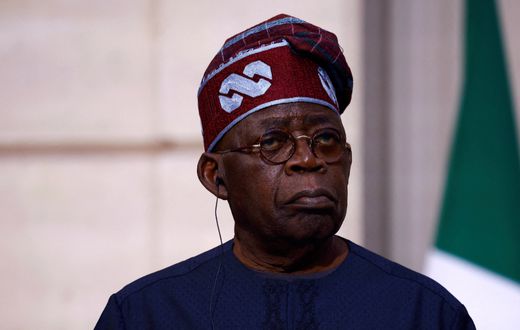
Photo: Nurphoto
Source: Getty Images
Background: Telecommunications Tax Policy and Public Response in Nigeria
The controversial 5% tax on voice and data subscriptions was originally introduced under the administration of former President Muhammadu Buhari. The aim was to increase government revenue but the practical impact proved contentious, especially amid Nigeria’s economic challenges and high inflation. As data access became increasingly central to education, business, and family life, many consumers described the tax as a barrier to digital participation and economic opportunity.
Leading industry groups such as the Association of Telecommunications Companies of Nigeria (ATCON) have been outspoken against the levy. ATCON and other stakeholders argued that the tax could make digital access prohibitively expensive for average Nigerians, particularly among students, low-income earners, and microbusinesses. Concerns were also raised about the viability of telecom operators, many of whom already face mounting infrastructure, energy, and security costs in Nigeria’s complex business landscape.
“We have repeatedly warned that imposing extra charges on mobile services would not only discourage internet adoption but also slow the digital transformation of Nigeria,” said Engr. Ikechukwu Nnamdi, a Lagos-based telecoms consultant. “For both businesses and everyday citizens, affordable access is non-negotiable if we want to remain competitive locally and on the continent.”
According to ATCON, the extra financial burden was likely to erode Nigeria’s leadership in sub-Saharan Africa’s digital landscape and limit the sector’s contribution to GDP growth, employment, and innovation.
Presidential Intervention, Fiscal Policy, and Consumer Relief
In a move widely applauded by consumer rights groups, President Tinubu acted quickly after assuming office in 2023, suspending the tax as part of a broader fiscal reform package. The policy was part of a suite of executive orders targeting tax rationalization, aimed at protecting household incomes and encouraging private sector investment. The suspension had an immediate impact, preventing a surge in mobile bills and enabling more Nigerians to stay connected for work, study, and family purposes.
Industry analysts have noted that Nigeria’s telecom sector is the largest in Africa by subscribers—boasting over 200 million active lines. The country’s digital ecosystem is critical not only to Nigerian prosperity but also to regional trade integration under frameworks like the African Continental Free Trade Area (AfCFTA). Thus, any regulatory change in Nigeria has ripple effects in Ghana, West Africa, and across the continent, where many look to Nigeria as a bellwether for ICT development.
Shortly after the suspension, the finance ministry and NCC held stakeholder engagement meetings to discuss ways of supporting both the industry and end-users while maintaining overall government revenue goals. The consensus in these meetings was that sustainable sector growth, transparent taxation, and greater government-industry collaboration were essential for lasting benefits.
NCC’s New Strategy: Enhancing Service Quality and Transparency
Following the tax removal, attention has shifted to other priorities—most notably service quality, reliability, and customer satisfaction. Many subscribers have expressed concern over slow data speeds, dropped calls, and intermittent coverage, illustrating that affordability and performance must go hand-in-hand. In response, the NCC announced plans to launch a new ‘quality of experience’ portal, designed to give subscribers a direct voice in reporting network performance and holding providers accountable.
In recent months, telecommunication firms have faced fresh pressure from regulators and consumers alike, particularly after a 50% price hike on some data and voice services. The Commission’s new initiative seeks to tighten regulatory oversight, boost transparency, and rebuild customer confidence in a sector that remains foundational to daily Nigerian life. The move has the potential to set a new benchmark for industry engagement and consumer protection across Africa.
According to local ICT policy analyst, Temitope Adeniji, “Now that affordability pressures are easing with the tax repeal, improving service quality must become the next national priority. If Nigeria can combine competitive pricing with reliable access, our digital sector will be the envy of Africa.”
Looking Beyond Nigeria: Regional and Global Implications
Nigeria’s decision to abolish the 5% telecom tax may inspire similar policy debates in neighbouring Ghana and other West African nations grappling with the balance between fiscal needs and digital inclusion. Across the continent, governments are searching for innovative ways to expand their tax base without stifling access or economic advancement. Lessons from Nigeria’s experience—both the pitfalls of over-taxing key sectors and the benefits of responsive governance—are likely to echo widely.
International development experts have highlighted that digital transformation is closely tied to overall socio-economic progress: supporting education, small business growth, and increased political participation. By prioritizing sector health and consumer welfare, Nigeria demonstrates a model that could be adapted in other African jurisdictions pursuing the twin goals of financial stability and inclusive growth.
- More affordable mobile bills: Average users are expected to see lower pricing for calls and data bundles.
- Positive business climate: Startups, SMEs, and youth entrepreneurs anticipate enhanced opportunities with fewer financial barriers to connectivity.
- Innovation boost: Tech hubs are optimistic that improved affordability will foster creativity, remote work, and information access.
- Regional leadership: As Africa’s most populous country, Nigeria’s telecom reforms may shape policy discussions from Accra to Nairobi.
However, some caution that with greater access will come heightened expectations—especially regarding service delivery and network reliability. Regulators, providers, and policymakers will need to keep collaborating to ensure real, lasting improvements.
Do you think the removal of the telecom tax will make a lasting difference in your daily life? What further steps should the government or NCC take to improve digital access across Nigeria, Ghana, and West Africa?
Have a news tip or telecom story you want to share or sell? Let’s get your voice heard—email your submission to [email protected].
For general support, reach out at [email protected].
Stay connected: Follow us for the latest business and digital news on
Facebook,
X (Twitter), and
Instagram!