

Nigerians woke up to a notable shift in the petrol market after a tense standoff between labour unions and management at Dangote Refinery narrowly avoided a nationwide strike. This development, unfolding between Tuesday, September 9, and Wednesday, September 10, 2025, prompted an immediate reaction in ex-depot prices not only at Dangote’s facilities but also across several key private depots.
According to reports reviewed by Legit.ng, Dangote Refinery—Africa’s largest—reduced its ex-depot petrol price from N840 per litre to N835 overnight. This adjustment came shortly after an initial price hike the day before, when the refinery raised its rate for marketers from N820 to N840 following labour unrest. The swift downward correction was mirrored, to varying degrees, by other private operators.
On Tuesday, concerns over a threatened industrial action led to price volatility. With the dispute making headlines, retailers and filling station operators tracked the developments closely, bracing for potential supply disruptions and more pricing uncertainties. Despite initial fears, a nationwide shutdown was ultimately averted, but not before several price points shifted:
- Parker’s depots reportedly sold at N862.00 per litre, marking a notable increase.
- A&E hiked its price by N5.00, now selling at N855 per litre (approximately a 0.59% uptick).
- Rainoil Delta matched this with their own N5.00 increase, reaching N880.00 per litre (a 0.57% rise).
- NIPCO Lagos maintained a lower profile at N850 per litre, while Soroman’s price landed at N870 per litre.
Negotiating Labour Peace: Dangote and NUPENG Settle
Industry tension stemmed from allegations by the Nigeria Union of Petroleum and Natural Gas Workers (NUPENG), who claimed Dangote Refinery management was obstructing unionisation. Workers, represented by NUPENG, demanded the right to join a registered labour body, stressing fair employee representation and participation in collective bargaining.
Recognising the risk of supply chain disturbances nationwide if the strike materialised, the Federal Government, through the Minister of Labour, Muhammad Maigari Dingyadi, stepped in as mediator. After a series of urgent discussions, Dangote Refinery and NUPENG successfully reached an agreement. Both parties proceeded to sign a Memorandum of Understanding (MoU), formalising steps to resolve the impasse and ensure industrial harmony.

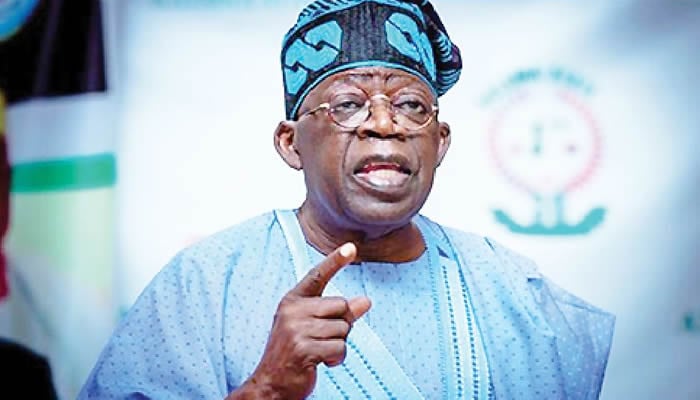
Photo: Bloomberg/contributor
Source: Getty Images
According to a statement shared by NUPENG on their official Facebook page, several key agreements were reached between the union and Dangote Refinery management:
“”Since workers’ unionisation is a right in line with the provisions of existing laws, the management of Dangote Refinery and Petrochemicals agreed to the unionization of employees of Dangote Refinery and Petrochemicals who are willing to unionize.
“The process of unionization shall commence immediately and be completed within two weeks (9th–22nd September 2025). It was further agreed that the employer will not establish any other union.
“Arising from the strike notice, no worker or employee of Dangote Refinery and Petrochemicals shall be victimized.
“Parties will report back to the Honourable Minister of Labour one week after the conclusion of the engagement.
“Based on this Memorandum of Understanding (MoU), NUPENG agreed to suspend the industrial action with immediate effect.”
- Recognition of employees’ rights to freely affiliate with registered trade unions.
- Immediate steps to facilitate union membership for all interested workers.
- Commitments to improved labour relations and communication channels.
- Establishment of a monitoring and implementation committee to oversee the agreement.
- Ongoing engagement, with government oversight, to uphold workers’ welfare and preempt future disputes.
Market Impact: What the Petrol Price Changes Mean
These rapid adjustments in ex-depot pricing have direct consequences for everyday Nigerians. For consumers, a drop in wholesale prices—even by a small margin—can help ease inflationary pressures at the pump, though pass-through effects often lag. For marketers and independent fuel station owners, every shift in depot pricing affects operational margins and can dictate how quickly products reach end users.
Industry experts point out that stability in depot prices is critical in maintaining steady supplies and avoiding speculation. As Lagos-based energy analyst Ifeanyi Okeke observes, “When depot prices start to swing, downstream operators anticipate further revisions and sometimes hold back supplies, which can escalate scarcity and create panic buying.”
The recent sequence of price increases and reductions highlights the delicate balance between market forces, labour relations, and policy intervention in the downstream oil sector. In West Africa, where cross-border flows and subsidies have long disrupted orderly trade, the role of large refineries like Dangote’s is becoming more central.
Latest Move: Dangote Plans Rollout of 4,000 CNG Trucks
Amid these refinery-labour negotiations, Dangote Petroleum Refinery is preparing to deploy 4,000 Compressed Natural Gas (CNG) trucks nationwide. This bold initiative aims to cut costs for petrol marketers and reduce the sector’s heavy reliance on traditional fuels.
According to the company, these trucks will be distributed for free, heralding efficiencies in logistics and expanding accessibility for marketers throughout Nigeria and potentially neighbouring markets. Proponents of the scheme say CNG adoption could make transportation of fuel products more cost-effective and environmentally friendly, reducing both logistics costs and emissions.
However, not all stakeholders are convinced. While the Independent Petroleum Marketers Association of Nigeria (IPMAN) has welcomed the initiative, noting its potential to stabilise pricing and improve supply, some players remain sceptical. Critics argue it could reinforce Dangote’s dominant market position, raising fears of a possible monopoly and resulting in job losses among smaller haulage operators who may be pushed out of the supply chain.
A fuel station operator in Ogun State, Musa Adebayo, told our reporter, “Any move that brings relief to petrol supply and reduces our operational costs is good, but we want a system where small players can survive without being squeezed out by big oil companies.”
The ongoing debate about whether Dangote Refinery’s CNG push is a lifeline or a challenge to market diversity is likely to continue shaping conversations across Nigeria’s energy corridors in the months ahead. With Nigeria and its West African neighbours still grappling with petrol price volatility, changes in labour relations, and fuel transport logistics, all eyes remain on the refinery’s next moves—and their ripple effects across the region.
What do you think about the latest developments at Dangote Refinery? Will the deal with NUPENG and the CNG rollout truly benefit ordinary Nigerians and the wider West African fuel market, or is there a risk of further consolidation and job losses? Drop your thoughts below and join the conversation!
Don’t forget to join our community for the latest business news and market analyses—follow us on Facebook, X (Twitter), and Instagram for real-time updates!