

Calls for Electoral Accountability: Debate Rises as “Vote Tinubu 2027” Billboards Emerge Months Ahead of Legal Campaign Window
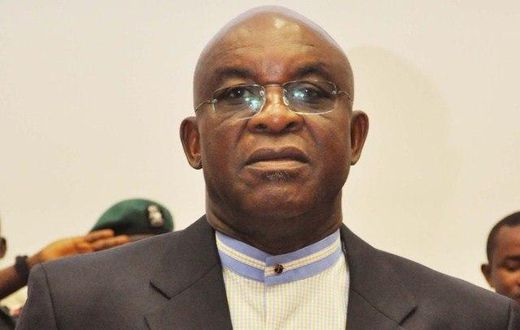
In a development that has captured national attention, a former federal legislator has openly challenged Nigeria’s electoral umpire, the Independent National Electoral Commission (INEC), to prove its neutrality. The former lawmaker, Dachung Musa Bagos—who previously represented Jos South/Jos East Federal Constituency in Plateau State—has directly urged INEC to take action against President Bola Tinubu and his supporters following the appearance of “Vote Tinubu 2027” campaign billboards across major cities, despite the 2027 general elections still years away.
Bagos issued his challenge during a televised interview on Thursday, expressing concern about the proliferation of early presidential campaign material that, in his view, breaches Nigeria’s Electoral Act by soliciting votes before the authorized period. His statements come at a time when questions about the impartiality and effectiveness of INEC—and indeed the entire electoral process—are gaining momentum nationwide.
Understanding Section 94: What the Law Says About Early Campaigning
At the heart of this controversy is Section 94 of the Electoral Act, 2022. According to the law, public campaigns or appeals for votes are strictly limited to a window that opens 150 days before an election date. Bagos and numerous civil society organizations have criticized the current climate, where many politicians and groups are already declaring their intentions and promoting their presumed candidates on television, in the press, and at political gatherings.
Recent weeks have seen an uptick in public endorsements for the 2027 elections, alongside the installation of campaign banners bearing the phrase “Vote Tinubu 2027” throughout urban centres like Abuja and Lagos. According to Bagos, these banners clearly violate the Electoral Act’s prohibition of early explicit calls for votes, an infraction he believes cannot be ignored if fairness is to be maintained.
“The law doesn’t stop politicians from consulting, meeting with supporters, or engaging communities,” Bagos clarified during his interview. “However, the point of violation is the use of direct appeals such as ‘vote for’ on banners and campaign materials outside the official timeframe.”
He pointed out that some actors have attempted to navigate this legal boundary by only displaying “2027” without the “vote for” phrase. “In Abuja today you might see posters of the president for 2027, but as long as ‘vote for’ isn’t included, it’s open to interpretation. Still, the moment the word ‘vote’ is added, it becomes a direct violation,” Bagos noted.
INEC’s Dilemma: Enforcement Challenges and Legal Loopholes
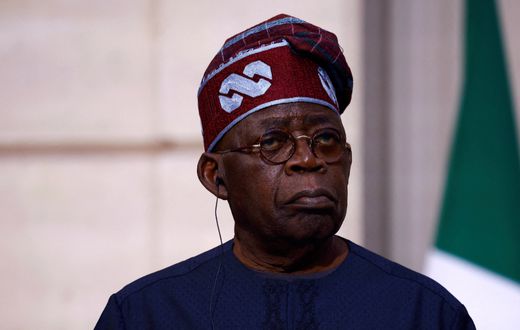
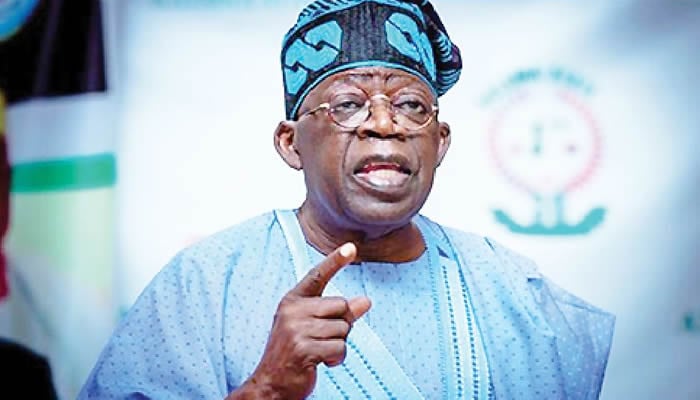
The situation took an interesting turn when the television programme’s producers displayed a campaign advert reading “Vote Tinubu 2027,” featuring photographs of President Tinubu and his wife. Bagos responded, “The appearance of the word ‘vote’ clearly contravenes Section 94. Inec is duty-bound to sanction anyone responsible—even if it involves the president and there’s no party logo present, the law should be enforced consistently.”
He went on to argue that for INEC to uphold its credibility and independence, it must “set the example” by cautioning both the president and his supporters, given the visible evidence of these billboards. “Let’s see INEC take concrete steps, such as writing to the president about these premature campaign messages. If they do not, it may foster perceptions that the Commission only applies the law to opposition candidates, not to incumbents,” Bagos warned. “If a strong opposition figure were to display similar campaign material, we expect to see a swift INEC reaction—but the same standard must be upheld for everyone.”
Bagos further highlighted the role of advertising agencies in the dissemination of these billboards, calling on INEC to engage with industry regulators like the Advertising Registration Council of Nigeria as first stakeholders in prevention and education around legal campaign practice.
INEC Responds: Legal Gaps and the Need for Legislative Intervention
In response to the mounting criticism, INEC Chairperson Prof. Mahmood Yakubu addressed stakeholders during a dialogue on the challenge of premature political campaigns. In a video segment broadcast by the same channel, Professor Yakubu acknowledged a significant limitation within the existing legal framework. He said, “Section 94 (2) and (3) imposes specific sanctions—a maximum fine of N500,000 on conviction—on any political party or individual acting on its behalf who engages in campaigns within 24 hours before the polling date.”
However, Prof. Yakubu admitted, “There is no penalty stipulated in the law for campaigns commenced earlier than 150 days before an election date, and this is a major challenge for the Commission to address early campaigns by parties, candidates, or their supporters.” The absence of specified penalties effectively renders enforcement of the law against premature campaigns toothless, raising calls among stakeholders and activists for urgent legislative reforms.
Pervasive Early Campaigning: A Challenge for Nigeria’s Electoral Culture
Early campaigning is not new in Nigeria. Over the years, observers have noted an increasing eagerness among politicians to begin the election race far in advance, seeing it as a way to secure support and shape public opinion. According to a 2022 report by the Centre for Democracy and Development, “the growing shift toward year-round campaigning undermines the letter and spirit of Nigeria’s electoral laws, while overwhelming both voters and the electoral system.”
A Lagos-based political analyst, Mrs. Ifeoma Anwane, commented, “Political parties have mastered the art of skirting legal lines, often relying on ambiguous messages that do not breach the law’s exact wording but clearly aim to influence voters prematurely.” She added that without clear penalties and consistent enforcement, loopholes will continue to be exploited across Nigeria and even in other West African democracies.
Comparative Perspective: Laws and Enforcement in West Africa
For context, electioneering laws in many West African countries set explicit campaign windows, although enforcement and penalties differ. Ghana’s Electoral Commission, for instance, can disqualify candidates or parties in cases of egregious breaches, while Kenya’s Independent Electoral and Boundaries Commission (IEBC) enforces similar restrictions with transparent, publicly reported sanctions.
However, political experts note that in Nigeria, political will and legal clarity remain critical hurdles. According to a study from the African Elections Project, “the lack of robust regulatory action both enables long-term campaigning and fosters a political atmosphere where incumbents and well-funded aspirants dominate the airwaves for years before actual polling.”
Community Voices: The Call for a Level Playing Field
Across Nigeria, the public has weighed in through social media and radio phone-ins. A civil rights activist in Abuja, Adebayo Ojo, remarked, “INEC must not give room for selective application of the law. Whether it’s the president or an opposition leader, the rules should be the same for all. If we want real democracy, accountability starts at the top.”
Meanwhile, advertising agencies, often caught in the crossfire, have requested clearer guidelines from regulatory bodies to avoid legal pitfalls. According to the Advertisers Association of Nigeria, more collaboration between INEC and industry bodies will be key to addressing the challenge of premature electoral messaging.
Moving Forward: What Reforms Are Needed?
Given the gaps identified by INEC and concerns voiced by both politicians and civil society, many are now calling for the National Assembly to revisit and strengthen the Electoral Act. Proposed reforms include:
- Setting clear, enforceable penalties for premature campaigns
- Defining what constitutes “implicit” versus “explicit” campaigning
- Establishing joint monitoring frameworks with advertising standards bodies
- Public awareness campaigns to educate both politicians and voters on legal boundaries
As Nigeria prepares for 2027, stakeholders agree that electoral reforms must be timely, enforceable, and transparent if public confidence in the democratic process is to be strengthened.
What do you think about the enforcement of electoral laws on campaign timing in Nigeria and West Africa? Should INEC have more power to penalise offenders, or is legislative reform the real solution? Share your views in the comments below and follow us for more insights into Nigerian and African democracy!
Got a news tip, opinion, or first-person story about Nigeria’s electoral system or political campaigns? We want to hear from you! Email us at [email protected] to get your story featured or to discuss story sales. For help or feedback, reach out at [email protected].
Join our community for the latest updates, analysis, and debates on democracy across Africa:
Share your thoughts below and invite friends to join the conversation!