

Ghana Receives First Group of West African Migrants Deported from the United States, Drawing Concern and Debate Across the Region
In a move that has captured attention across West Africa and the larger international community, the United States government, under a new deportation initiative, has deported a group of migrants—mainly from Nigeria and other West African nations—to Ghana. This development, widely characterized as the first significant transfer of Sahel region nationals to a “third country” under U.S. immigration policy, was confirmed by Ghanaian President John Mahama at an Accra press conference on September 10, 2025, according to local media outlets and official statements.
President Mahama announced that Ghana had received at least 14 deportees in an initial batch—a group that includes Nigerians, one Gambian, and other nationals from across West Africa. According to the president, this step follows an arrangement made with the U.S. government and is said to align with the Economic Community of West African States (ECOWAS) protocol, which guarantees free movement among member states. Nevertheless, the nature and implications of this arrangement have sparked extensive conversation and debate locally and regionally.
Providing more detail during the press conference, Mahama stated, “A group of 14 deportees, including Nigerians and one Gambian, have already arrived in Ghana, and the government facilitated their return to their home countries.” Sources within the Ghanaian Ministry of the Interior, speaking to regional news channels, indicated that support structures have been put in place to help process the arrivals efficiently and humanely, in accordance with national and ECOWAS standards.
Nigerians Heading Home: Support and Challenges Around Deportation Transfers
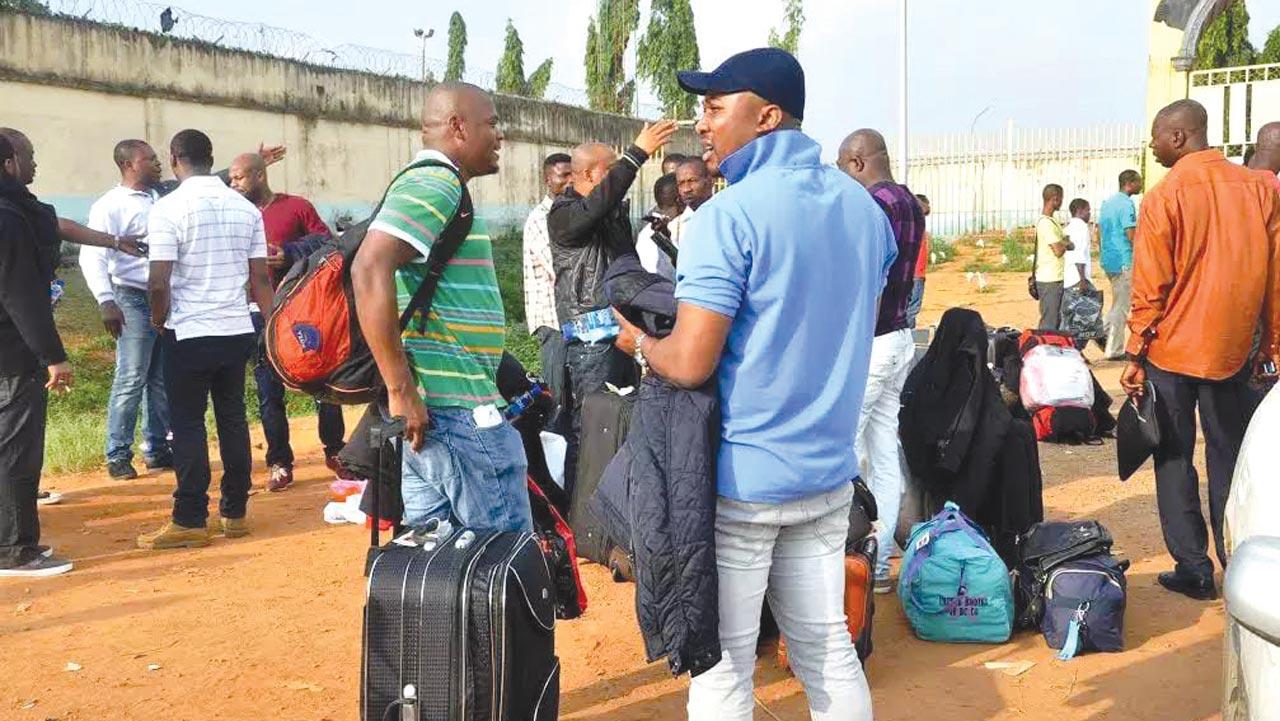
Trump sends Nigerian migrants to Ghana in first major deportation/Illustration
President Mahama disclosed that arrangements were promptly made by the Ghanaian authorities to transport the Nigerian deportees onward to Nigeria via bus. Meanwhile, Ghana is currently assisting the Gambian national in preparing for their journey home, according to details shared by the Ministry of Foreign Affairs.
“We were approached by the US to accept third-party nationals who were being removed from the US. And we agreed with them that West African nationals were acceptable,” Mahama explained, emphasizing that the ECOWAS agreement allows fellow West African nationals to enter Ghana without a visa. He added, “All our fellow West African nationals don’t need visas to come to our country.”
Despite citing this protocol, Mahama admitted that the transfer arrangements came at a time when Accra’s relations with the U.S. have grown increasingly complicated, with increases in U.S. tariffs on Ghanaian exports and the imposition of visa restrictions on some Ghanaian citizens. Nonetheless, Mahama remarked that he remained cautiously optimistic, suggesting that cooperation on regional migration could be harnessed for broader diplomatic engagement.
Trump’s Deportation Policy: Shifting Conditions for African Migrants

President Donald Trump
Observers note that this recent transfer marks a new phase in U.S. immigration enforcement, with President Donald Trump’s administration prioritizing the deportation of irregular migrants to so-called “third countries” rather than returning them directly to their countries of origin. According to multiple international media reports, including coverage by Reuters and BBC, this approach forms part of a wider push by Washington to “disrupt migration routes” and negotiate hosting agreements with countries willing to temporarily shelter deportees.
The Trump administration has reportedly reached out to various African nations to accept deportees under this third-country relocation policy. While Ghana chose to cooperate within ECOWAS protocol guidelines, other countries have adopted different stances. According to statements featured in Nigerian newspapers such as The Guardian and Daily Trust, the Nigerian government has refused to receive deportees sent to third countries rather than repatriated directly. Despite reported diplomatic pressure from U.S. officials to accept such migrants, Nigeria’s stance has remained firmly against the arrangement.
Speaking in July, Nigeria’s Foreign Affairs Minister, Yusuf Tuggar, said, “The Nigerian government will not cave in to pressure to take in deportees from third countries, citing both economic and security concerns.” Similar worries have been articulated by Ghanaian analysts, who caution that third-country transfers present challenges relating to national security, community reintegration, and the safeguarding of basic migrant rights under international law.
The Ghanaian scenario is not unique; in recent months, the U.S. has implemented similar deportation measures involving other African countries. According to data compiled by the International Organization for Migration and reported by regional news outlets, five individuals were removed to Eswatini and another eight to South Sudan. Each transfer, observers say, comes with its own set of diplomatic, humanitarian, and legal complexities.
Earlier in the year, Rwanda also received migrants deported from the United States, following a bilateral agreement to accept up to 250 individuals. According to analysis by African immigration experts speaking to Africa Confidential, these agreements reflect a broader trend toward shared responsibility for migration management but raise questions regarding procedural fairness and long-term integration support for returnees.
It’s important to note that under Trump’s deportation blueprint, the U.S. has also transferred deportees from regions beyond Africa, including Jamaica, Vietnam, and Laos. Human rights organizations, such as Human Rights Watch and Amnesty International, have raised concerns about the treatment of those affected, arguing that such relocations may risk violating core international legal protections. U.S. officials, however, maintain that all such transfers are conducted in accordance with existing legal obligations and bilateral agreements.
West African Perspectives and the Way Forward: What Does This Mean for Nigeria and the Region?
For many readers in Nigeria and across West Africa, the deportation of migrants to neighboring countries under U.S. policy stirs profound questions about regional solidarity, migration governance, and the future of West African integration. Local civic organizations, including groups like the Nigerian Network for Migration and Development and the Ghana Refugee Board, have called for increased clarity, better support for returnees, and stronger protections to prevent undue hardship among those caught in international legal limbo.
On the ground, some affected families say the process, while officially sanctioned, has brought emotional and financial uncertainty. According to civil society commentators cited by Premium Times, these situations challenge both sending and receiving countries to enhance social welfare systems and foster dialogue on safe, voluntary, and dignified migration.
Legal analysts in Lagos and Accra emphasize the need for a clear regional framework, suggesting that the ECOWAS protocol on free movement, while important, may not sufficiently address the complexities raised by U.S. third-country deportations. They advocate for robust monitoring, joint policy development with the African Union, and assurances that deportation agreements are transparent, accountable, and protective of migrants’ rights.
Conclusion: What’s Next for Migration Policy in West Africa?
The U.S. decision to send Nigerian and other West African deportees to Ghana is already shaping regional debate over migration management and international cooperation. For everyday Nigerians, Ghanaians, and fellow West Africans, the development highlights the importance of national and regional policies that balance border security, human rights, and community reintegration.
As countries navigate external pressure and internal priorities, a central question emerges: How can Nigeria, Ghana, and their neighbors ensure the dignity and rights of all migrants while maintaining the integrity of regional agreements and international commitments?
What are your thoughts on this new wave of deportations and the responsibilities of neighbouring West African nations? Have your say in the comments below or share your perspective with us via email.
Food inquiries: [email protected]
General support: [email protected]
Story sales/submissions: [email protected]
Follow us on Facebook
Follow us on X (Twitter)
Follow us on Instagram